Blackpool and Fleetwood Jewel Class
Diamond
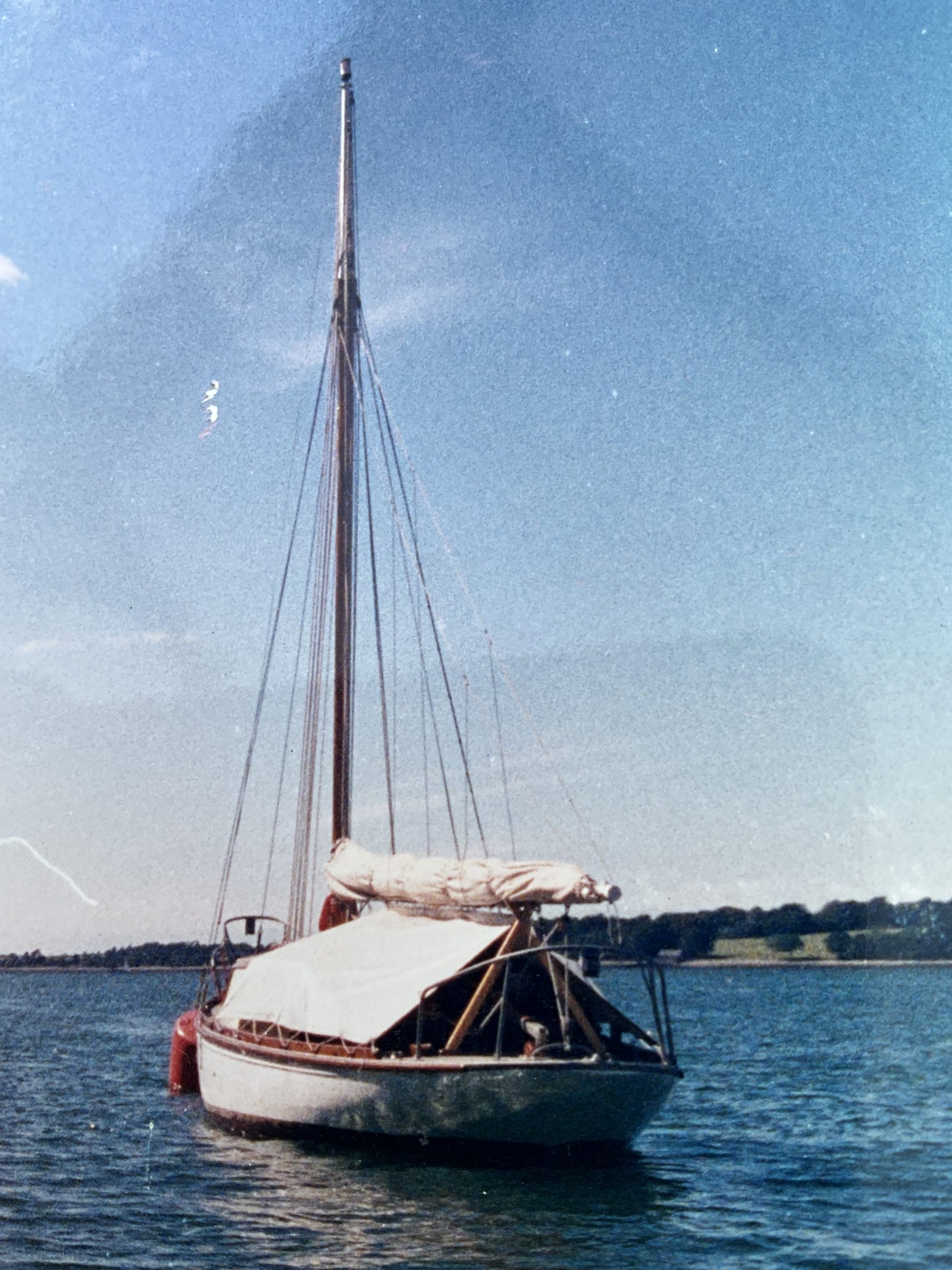
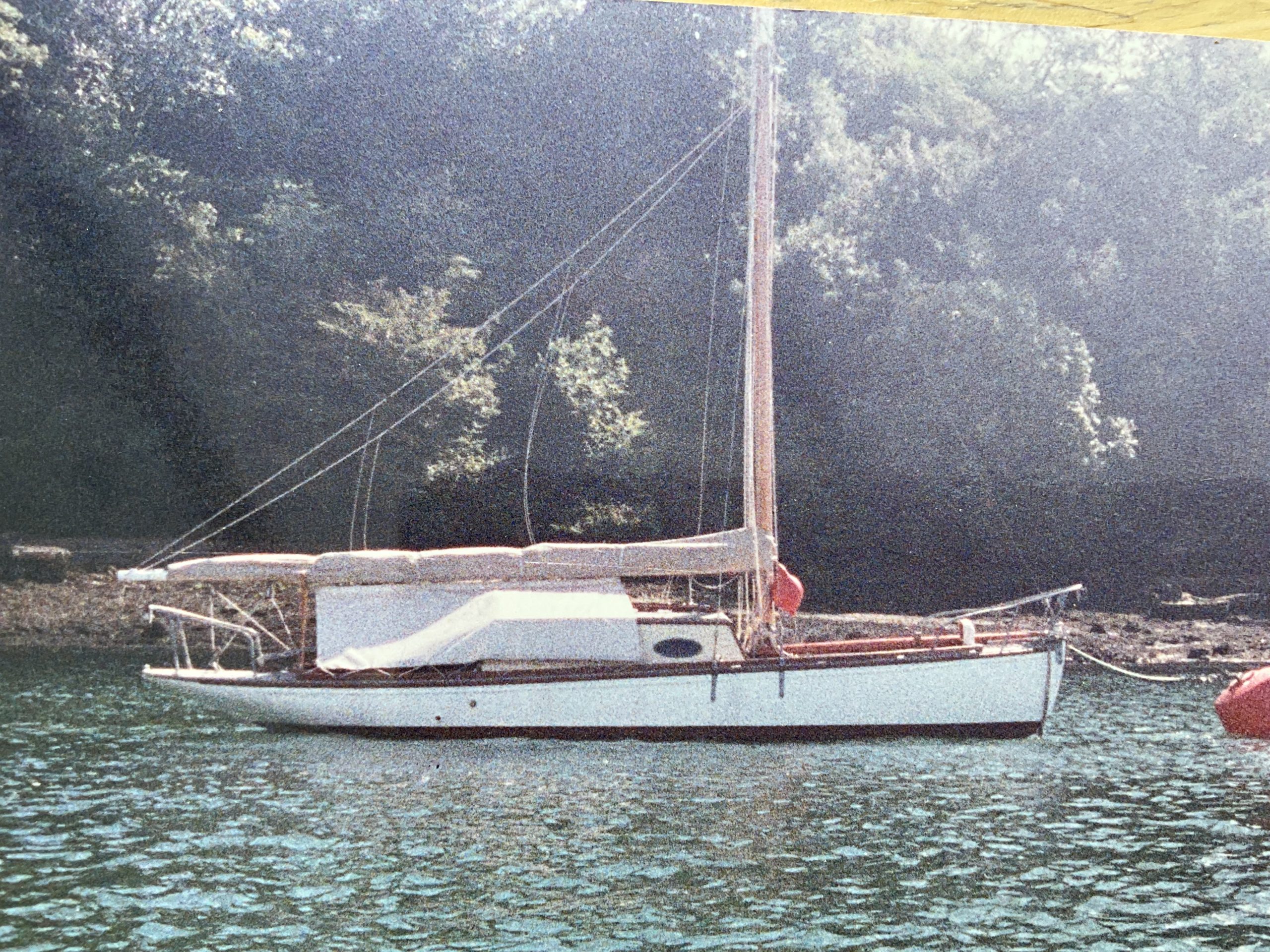
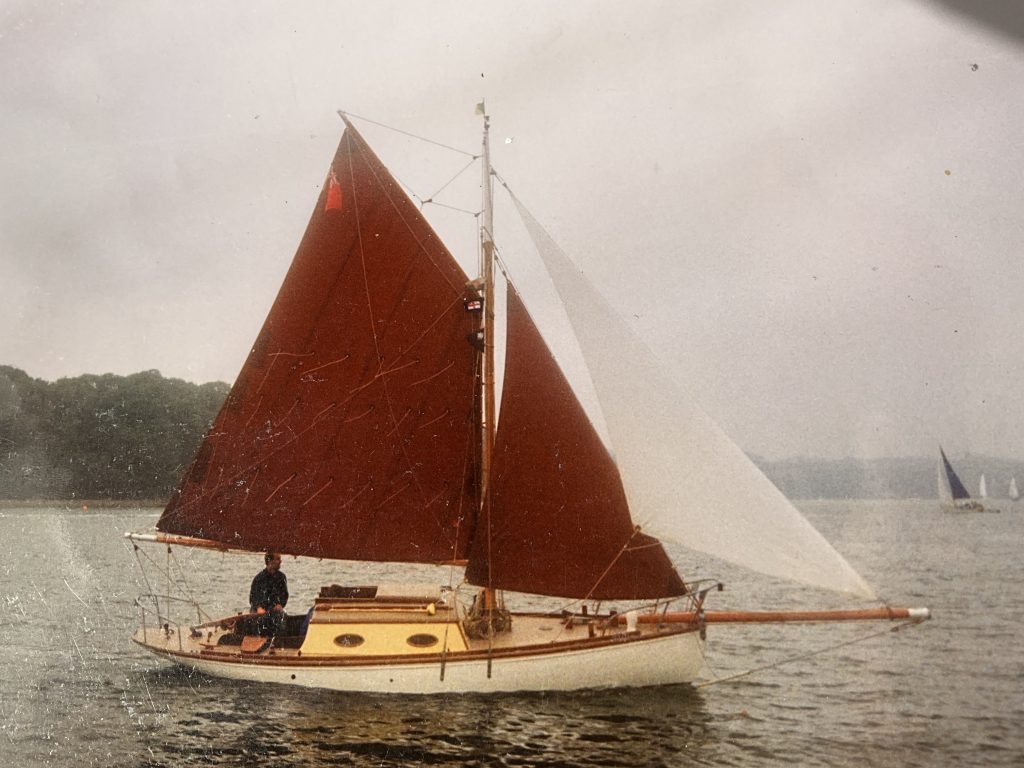
Diamond was a Blackpool and Fleetwood Jewel Class Yacht built by William and Crossfields and Sons in 1911. She would originally have had an open cockpit. She was sloop rigged with one foresail at least till the Second World War. By 1980s she was Bermudian rigged. Diamond was restored between 1985 and 1987 at Lymm in Cheshire by Martin Royle. She was changed back to a gaff rig..
Between 1987 and 1997 she was kept on the Menai Straits.
Boat statistics
- Built
- 1911
- Length Over All
- 23 ft (7.01 m)
- Waterline
- 19.5 ft (5.94 m)
- Draft
- 2.9 ft (0.88 m)
- Rig
- Originally gaff sloop with one foresail. Later gaff cutter with two foresails.
Introduction
Diamond was probably the longest surviving Jewel Class. yacht. She was still actively being sailed in the 1990s. We do not know if she is still in existence. Diamond is the Jewel Class yacht whose history we know most about.
History by Year
-
1911
Built in Arnside
by William Crossfield and Sons
-
1913
Won race at Fleetwood Regatta
Helm recorded as R.S.Taylor
-
1924
Brought by Arthur Mansergh
A Lancaster Linoleum Merchant
-
1930
Brought Dr W Bury
of Queens Square, Lancaster
-
Early 80s
Fiddlers Ferry
Kept at Fiddlers Ferry near Warrington having been previously on the Wyre Estuary
-
1985 - 1987
Restoration
Restored by by Martin Royle at Eric Bergqvist's old yard at Lymm
-
1987 - 1997
Menai Straits
Kept on Menai Straits by Martin Royle
-
1997
Sold by Martin Royle
Full History
Early Years 1911 - 1923: Fleetwood
Diamond took part in Jewel Class Races from 1911 to 1914. In 1913 she won the race at Fleetwood Regatta helmed by R.S.Taylor. In the ladies race in August 1913 Diamond went aground.
Diamond came second in the invitation race for other clubs in September 1912 losing by just 35 seconds to Iolite after a 5 hour race. Iolite snatched the lead from Diamond on the last leg. Diamond had previously led throughout. In 1913 invitation race, Diamond won. In both races she had a crew from the Royal Mersey Yacht Club.
R.S.Taylor continued to own Diamond after the First World War. In 1922 Lloyds Register he is recorded as owning Diamond jointly with F.W.Lee of Balmoral Road, St Annes. R.S Taylor’s address was listed as Eddington Road, St Annes a road leading down to Fairhaven Lake. Both streets feature substantial houses and will have been newly developed at the time. Diamond’s home port was still Fleetwood. F.W.Lee (Fred) owned Iolite, another Jewel Class prior to the War. In 1930 he was Captain of Blackpool and Fleetwood Yacht Club.
R.S.Taylor and F.W.Lee were involved in setting up the Fairhaven Sailing Club in Lytham St Annes in 1926. F.W.Lees was the Club Captain. The boats in first year which were made by the Parks Manager were named after jewels. They included a Diamond, Ruby, Sapphire, Emerald and Coral. They were replaced with new boats with more of disc shaped hull in 1927 also made by the Park Manager which were move suitable for the lake’s shallow water. Fairhaven Lake is still used for sailing today for training by Ribble Cruising Club and by the Sea Cadets.
1924 - 30 Arthur H Mansergh
In 1924 Diamond was brought by Arthur H. Mansergh (1867-1937) a Lancaster Linoleum merchant.
 Arthur was a member of Blackpool and Fleetwood Yacht Club, Royal Mersey and Isle of Man Yacht Clubs.. Before the First World War he lived at Sunderland Point, a village approached by a tidal road at the mouth of the Lune Estuary south of Lancaster. At the time of his death, he lived in Marine Road, Bare, Morecambe.
He also owned “Sue”, a 38 foot yacht, which he kept at Sunderland Point. Sue was built by Woodhouses in Overton in 1919. He sailed “Sue” regularly to the Scottish Isles and took part in the Fleetwood – Isle of Man race. He employed a sailing master to sail “Sue” but took the helm himself.
In 1912 he was the Vice-Captain of Blackpool and Fleetwood Yacht Club and from 1925 to 1926 Commodore. He was a Commissioner for the Port of Lancaster. Diamond’s home port was Lancaster, which suggests she was kept at Sunderland Point.
His obituary said he was one of the most popular yachtsman in the country.
1930 - 1940 Dr W.Bury
From 1930 Diamond is recorded in Lloyds Register as being owned by Dr F.W.Bury, the senior partner in the Queens Square practise in Lancaster who kept her until at the least the Second World War. Diamond is not recorded in the Register after the Second World War..
Dr F.W.Bury was the senior partner of the Queens Square practise in Lancaster. He had previously worked in the Lancaster Royal Infirmary and been the Chief Medical Officer for the Smalley district of Derbyshire. He was President of Lancaster Royal Infirmary Committee in 1938. Also of note was that he President of Lancaster Canine Society judging dogs shows and President of a Cycling Club, when he lived in Derbyshire. He gave evidence at the trail of Dr Ruxton of Dalton Square Lancaster for murder.
In 1932 an Ailsa Crag petrol engine was installed on Diamond. Her home port in Llloyds Register was still Lancaster, which suggests she was kept at Glasson Dock or Sunderland Point.
Fiddlers Ferry - Early 1980s
By the early 1980s Diamond was kept at Fiddlers Ferry on the upper reaches of the Mersey near Warrington on a swinging mooring in the river.
Fiddlers Ferry
Fiddlers Ferry is best known for the power station that operated for nearly 50 years from 1971 to 2020. There is a sailing club located on the river by the entrance to the Sankey Canal. There is a marina and boat yard with berthing on the canal. Up till the 1970s Runcorn further down the Mersey had a fishing fleet and was the base for several Lancashire Nobbies, including Hannah Hambleton built by Crossfields in 1931.
Diamond in 1985
Prior to Fiddlers Ferry Diamond was kept on the River Wyre at Skippool. She had a Bermudian rig with a triangular sail, an old wooden International Dragon Class mast and a very large overlapping Genoa attached to a short bowsprit. Her deck, cabin and cockpit were all roughly built from marine plywood. There was very little interior fit out in the cabin. She smelt of petrol from the inboard 3.5hp Briggs & Stratton air cooled pull start engine running a wing propeller via a centrifugal clutch. Her young owner was a very good sailor, sailing her confidently on the tricky upper reaches of the Mersey. She had a great turn of speed in the flat water of the river, but had a hefty dose of weather helm making her harder to steer.
Restoration by Martin Royle 1985 -87 Background
Introduction
Around 1985 Diamond was acquired by Martin Royle, then a member of Fiddlers Ferry Sailing Club. Initially he was beaten in buying her by another club member, but managed to acquire Diamond from her new owner shortly afterwards. He was attracted by the boat’s low counter.
Martin’s background
Martin had previous experience of boat building from building “Sarah” a Westcoast 16 foot trailer-able 2 berth gaff rig boat and restoring “Ocior” a 29 foot long wooden 1947 International Dragon classic keelboat (sail number DK127). Both projects were in partnership with Bill Winter, who owned a boatyard on the Bridgwater Canal at Lymm in Cheshire.
“Sarah” was the protype of a new class of boat and was exhibited at the Southampton Boat Show in 1982. When Bill gave up boatbuilding to get a “proper” job, Eric Bergqvist (!943 – 2021), who also had a yard at Lymm, brought the Westcoast 16 mould from Bill. Eric used the mould for his Winkle Brigg design, of which around 122 were built. Martin helped Eric with the design of Winkle Brigg rig based on his experienced with the Westcoast 16.
International Dragon keelboats date from 1929. They were an Olympic class from 1948 to 1972. They were constructed in wood prior to 1973.
In 1985 both Martin and Bill were members of Fiddlers Ferry Sailing Club. “Sarah” which was for sale to pay for the restoration of “Ocior” was kept in the water at Fiddlers Ferry whilst “Ocior” was on the hard being restored. Martin whose day job was a civil engineering draughtsman wanted to learn about more traditional boat building and had developed in interest in inshore fishing boats of 30 foot or less.
Bill had been Martin’s woodwork teacher at Lymm High School. He had taught Martin technical drawing and how to sail. Bill later saved Martin’s life after he had become separated from his boat, which had capsized off Liverpool. Bill was Martin’s best man when he got married in 1992.
Martin has retained his interested in boats. Since 2000 he has restored an International 12 racing dinghy and a National 12 dinghy built in 1937.
Location of Restoration – Eric Bergqvist’s old yard at Lymm
Initially Martin had hoped to restore Diamond afloat, but a basic survey revealed extensive rot in the marine ply cabin trunk and GRP sheathed deck, neither of which were original. The hull made of pitch pine which was original was in good condition. To enable him to restore Diamond close to his home he rented Eric Bergqvist’s old workshop in Lymm, repairing dinghies in his spare time to pay the rent, as well continuing with his day job.
Eric Bergqvist had moved his business to Fiddler Ferry, whilst Bill Winter had given up his boatyard. In 1979 Eric Bergqvist had taken moulds from the Sir William Priestley the Morecambe fisherman’s lifeboat built by Crossfields in 1934 which have been use to make ten or more replicas.
Restoration by Martin Royle 1985 - 87: Description of Work
Martin started by scrapping paint off back to the wood.
Deck Beams – The deck (and cabin beams) were replaced in stages so not to lose the shape of the hull with new Columbian Pine beams. Columbian pine is a North America wood. It is also known as Douglas Fir. Columbian refers to British Columbia.
Decking – A new deck including cabin top and sides was installed using 12 mm marine play. This was sheathed in glass fibre sheets covered in epoxy. Martin’s father helped lay the glass fibre sheets helping stretch it so it did not warp. The glass fibre sheets were obtained from a supplier of glass fibre for Portacabin roofs. The epoxy was brought from a producer of epoxy for industrial flooring based in Warrington. Martin meet their chemist to check that the epoxy could be used in marine environments. Six bronze frames were fitted round the top and sides of the cabin in bronze. Martin made patterns for these which were then cast in bronze.
Hull – The hull was found to be in good condition. It was made up of 1″ thick pitch pine panels with 1.25″ shear strakes at the top. Frames were made of oak. They were alternate thinner steamed frames and thicker sawn frames made up from futtocks. The boat’s back bone or centre line (Stem, Keelson, Sternpost) was made up of oak and elm. The counter was made of a solid block of oak and was probably not original. The iron keel and pig iron ingots used for ballast looked original.
Cabin – The framework of the cabin was retained. The old interior was scrapped. The design of the new interior was based on Martin’s experience with “Sarah” his previous boat. The were 2 to 3 berths with a V shaped arranged under the foredeck with seats extending back into the cabin. There was an anchor chain locker at the bow forward of the V shaped berths. At the rear of the cabin on the port side a gas stove and on the starboard side a sink with plumbed water. Access to the engine was underneath steps up to the cabin. The steps and adjacent panels were removable to improve air circulation to the engine, which was air cooled. There was a portable toilet covered by a cushion between the V berths. The interior of the cabin was pine either varnished or painted white. The floor of the cabin and cockpit were removable to access to the hull, keelson, keel bolts, propeller shaft and ballast.
Deck Fittings – New deck fittings (Cranse, Gammon Iron, Fife rail and pins round the mast for halyards, Shroud Plates, Bowsprit traveller) were made in mild steel by Martin and galvanized in Widnes. The pulpit rail at the front of the boat and push-pit at the rear were retained but re-galvanized. These would not have been original but reduce the chance of someone falling in whilst working at the back or front of the boat.
Rubbing strake and toe rail – New rubbing strakes at the top of the hull and toe rails at the side of the deck were made in Iroko, a very durable wood from West Africa,
Side Plates – Martin made removable side plates or legs for Diamond to stop her leaning to one side on a drying mooring at low tide
Engine – The small 3.5hp Briggs & Stratton engine was retained, but new controls and clutch added. The propeller was resized.
Spars (Mast, boom, gaff and bowsprit) – Martin made new spars from Columbian pine (also known as Douglas Fir), a North American tree. The 6 foot bowsprit was later shortened to be 5 feet and the foresail adjusted to make them more manageable.
Rigging – Martin designed the new rigging based on the sail plan of a Morecambe Bay Prawner, cutter rig with two foresails. The rigging was designed to balance the sail and to enable the boat to be reefed with sail area reduced in adverse weather. The advantage of a cutter rig with two smaller foresails over a sloop rig with one large foresail is that in strong winds, one of the foresails can be taken down. Ropes were 3 strand mock hemp from English Braids, a leading rope manufacturer. Blocks were wooden Tufnol.
Sails – New sails were ordered from Rockalls. Working sails were in tan whilst lighter weather sails were white. Martin specified traditional vertical cut.
During the restoration Martin was in contact with Jon Wainwright, owner of Deva, a Royal Mersey Rivers Class Yacht, for advice and compare notes. At same time Jon was doing work on Deva.
At the end of restoration Diamond was taken to Bangor by road, where she was craned in at Dickies yard.

Menai Straits 1987 - 1997
Diamond was keep on a swinging mooring initially at Plas Newydd south of the bridge over the Menai Straits to Anglesey and then Y Felinheli further along the straits towards Caernarfon. At Plas Newydd she was kept next to Bill and Martin’s International Dragon. Jon Wainwright’s Deva was kept at Y Felinheli from 1964 to 1966. Y Felinheli is an old slate port.
Martin sailed her at weekends, cruising up and down the straits with friends as crew, often in company with other boats. Diamond sailed well. Because of her low free board, she needed reefing early. Having removable legs at the side meant she did not lean over at low tide on a drying mooring. The only time that she did lean over at low tide on her side was on a drying mooring at Beaumaris. She came up fine when the tide came in.
The engine remained a problem, but always eventually started. The clutch never worked properly despite adjustments. When you pulled the cord and the engine started the boat started to go forward rather than being stationary in neutral. There was no reverse.
The boat was taken out of the water each winter. She was refinished each spring before going into the water. A heavy cover was acquired which protected the boat and reduced maintenance. The only major work that was carried was to replace a frame by the engine which had broken. The mounts for the engine were improved during this work.
Martin married in 1992. He sold Diamond in 1997 as he could not justify the time and expensive of owning her given that his wife did not sail. He took a break from sailing till 2002 when he acquired an International 12 dinghy, which he eventually completed the restoration of in 2013.
Diamond’s history after 1997 is unknown.
Gallery
Menai Straits 1987 - 1997
Photos of Diamond when owned by Martin Royle on Menai Straits