Introduction
William Crossfield and Sons built ten Rivers Class Yachts for the Royal Mersey Yacht Club.. Six were built in 1912, including Arnside Sailing Club’s Severn and a further four in 1914. They were part of trend towards one design classes.
The yachts were designed for short evening races on the Mersey.,
Rivers Class Yachts are 23 feet (7 metres) long at deck level with a draft of 3 feet (1.1 metres).
Class Summary
- Number Built
- 10
- Built For
- Royal Mersey Yacht Club
- Years Built
- 1912 and 1914
- Length
- 23 feet at deck level
- Draft
- 2.9 feet
- Original Purpose
- One-design racing class for short evening races on the River Mersey
- Design Influence
- Inspired by the Blackpool and Fleetwood Jewel Class
- Original Sail Colour
- Crimson

Class History
A prestigious Royal Mersey commission
The Rivers Class would have a prestigious job for William Crossfield. Founded in 1844, the Royal Mersey was one of the county’s leading yacht club. Its membership was drawn from the Liverpool mercantile elite, including owners of shipping lines. Many of the Royal Mersey members were interrelated, such as the Forwoods and MacIvers, two leading Liverpool ship owning families with sons following in their father’s footsteps as members. In 1914 the Royal Mersey organised a regatta involving the King’s yacht “Britannia”
History
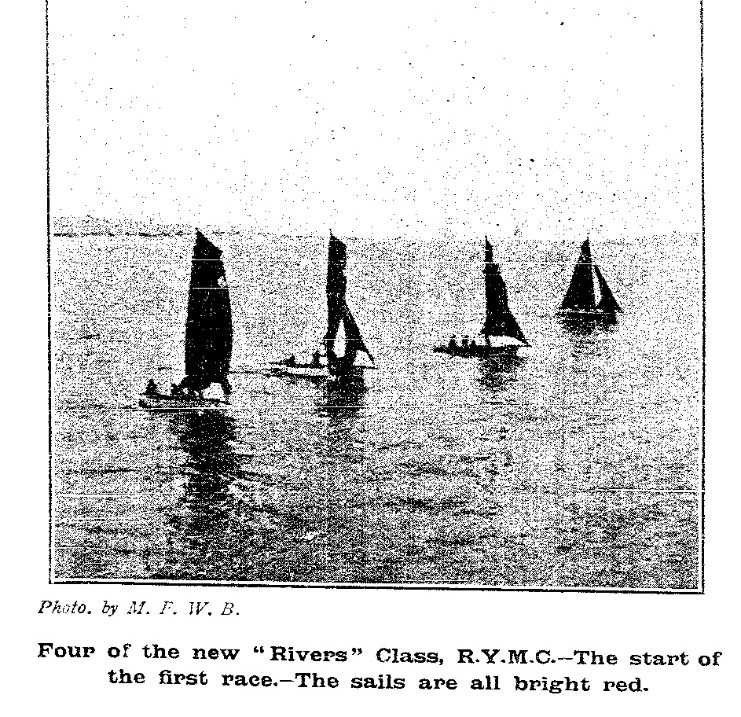
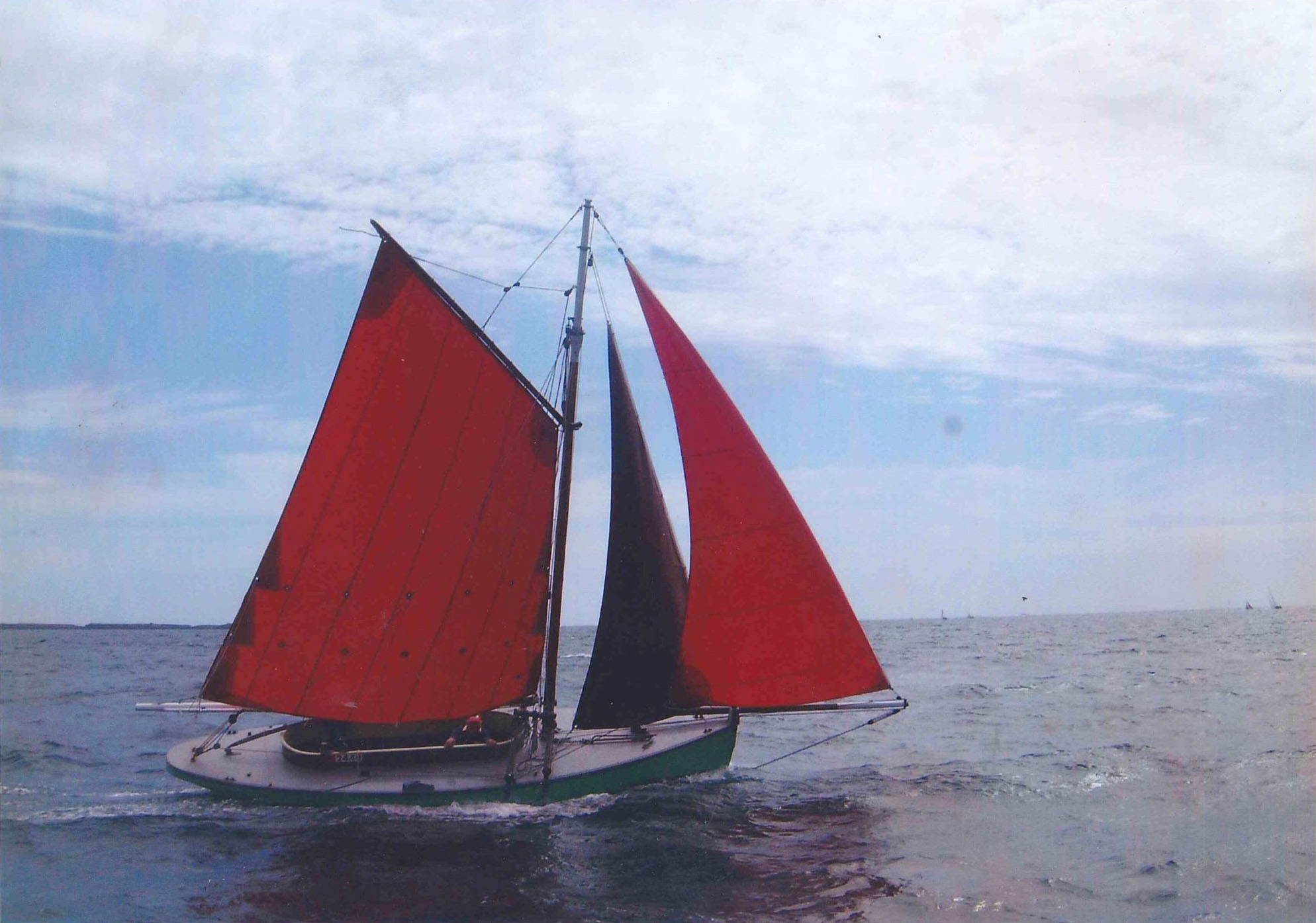
William Crossfields and Sons built ten Rivers Class yachts for the River Mersey Yacht Club. The boats cost £50 each, with an additional £12.7s for sails (to build the boats today would cost around £20,000). All the boats were named after rivers. The design of the boats was based on the Blackpool and Fleetwood Jewel Class. The boats had crimson (Turkey Red) sails.
The boats were part of a trend towards racing yachts of a standard design, where everybody competed on equal footing. The boats were allocated to owners by ballot. The Rivers Class were smaller than the typical Royal Mersey Yacht, which on average weighed 55 tonnes. They were designed for short races on the River Mersey with 2 to 3 people crewing.
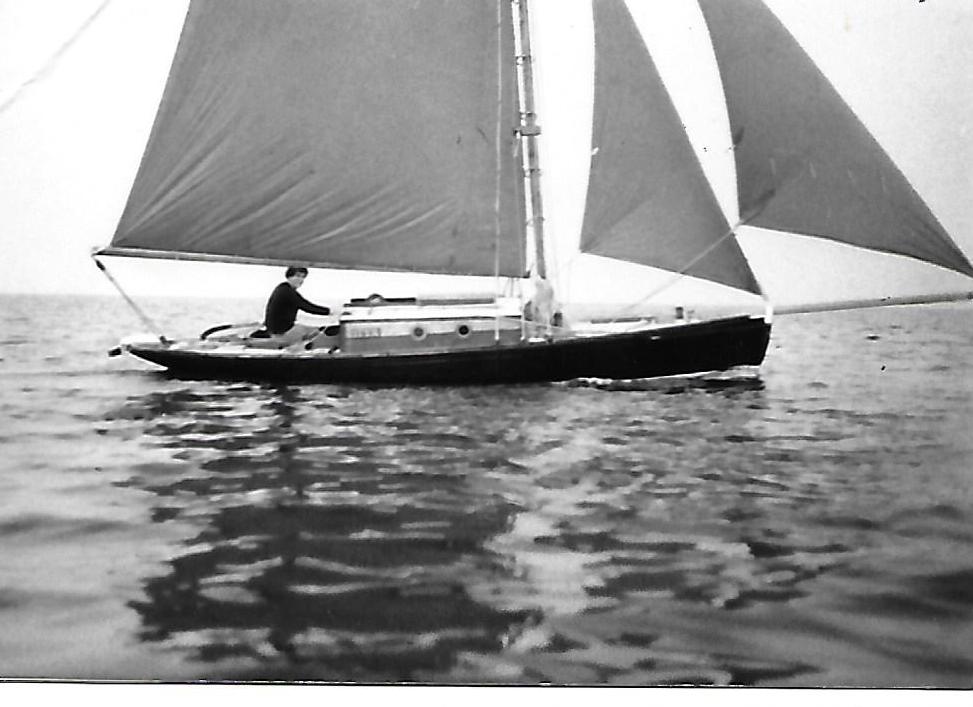
The boats were designed as sloops with one foresail, though several became cutters with two foresail after they had left the Royal Mersey. The main advantage of a cutter rig is that one foresails can be taken down in adverse weather. Originally there would not have been a cabin. Crews were amateur rather than paid, as in the case of larger yachts.
The original sail specification included a spinnaker. The jib came in three sizes (small, medium and large) allowing a choice of sail depending on the weather. In total the boats carried about 350 square foot of sail. The sails were supplied by R.Perry & Co, sailmakers and chandlers in Birkenhead.
Around nine races were held each season between May and July, largely in the evening. In summer, Royal Mersey members took part in the Menai Straits Regatta at Beaumaris in Anglesey, where there were Rivers Class races. Neighbouring yacht clubs on Merseyside also put on races for the Rivers Class. The yachts were raced for money. In 1914 prize money was £50.10s (about £5000 at current values). There was an annual regatta in July, which also included a race for local fishermen, which in 1914, was won by Helen II a prawner built by Crossfields in Arnside. A steamer was hired for the regatta for spectators (including ladies) to watch the racing.
Owners of Rivers Class yachts included three 1908 Olympic Silver Medallists, a British Lions Rugby Union Manager, and other members of the Liverpool merchant elite. The Royal Mersey Yacht Club is located in Rock Ferry, Birkenhead, close to an area of large Victorian houses overlooking the Mersey. The chairman of the Rivers Class Committee was Charles Livingston, Vice-Commodore of the Club, Director of Cunard, a leading yachtsman and first owner of Rivers Class yacht Mersey.
In 1925 the Earl of Derby, who was Secretary of State for War 1917-18, Commodore of the Royal Mersey Yacht Club, and the leading horse race owner of the twentieth century, bought Deva, one of the boats. The Earls of Derby owned Witherslack Hall on the other side of the estuary to Arnside. Their main seat is Knowsley Hall outside Liverpool. Up until 1813, Arnside was part of the Derby Estate. If it had not been for the outbreak of World War One, it is probable that more Rivers Class yachts would have been built. In many ways they are a reminder of a way of life that ended with the First World War.
Six boats were delivered in 1912
- Mersey
- Alyn
- Dart
- Deva
- Elwy
- Styx
Severn was originally called Elwy.
A further four boats were delivered in 1914:
- Bronx
- Clwyd
- Keer
- Styx II
Esk was originally called Bronx.
Names of boats were often changed when a new owner bought the boat or even swapped making it difficult to follow the history of the boats.
The Royal Mersey Yacht Club continued racing the Rivers Class to 1937. The boats were replaced from 1935 by the Mylne Class, which are still raced by the Club today.
By the 1950s and 1960s they were cheap yachts. At least four boats had cabins added to them making them suitable for longer voyages. Six survived to 2000, though the number has since declined.
By the 1980s four boats were on the East Coast, including Arnside Sailing Club’s Severn and Jon Wainwright’s Deva. Jon owned Deva for over 40 years from the 1960s till his death in 2007. Jon wrote “Only So Many Tides”, a book about his ownership of Deva. Jon sailed Deva across the North Sea several times winning a European Yacht Championship for vintage yachts.
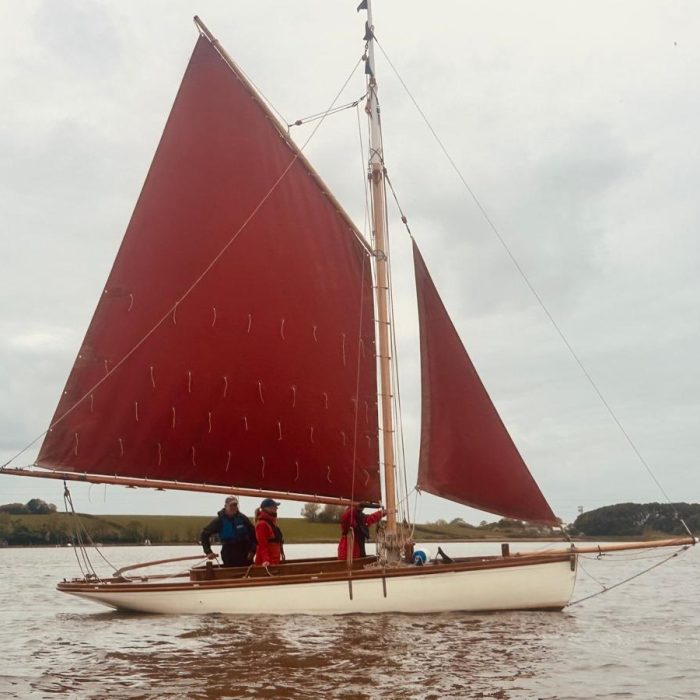
Severn was bought by Arnside Sailing Club in 2018, to have an example of a Crossfields boat in the village. She is currently being restored with the help of grants from the National Lottery Heritage Fund and other funders, whilst Deva is being completely rebuilt.
Rivers Class Specification
The original specification for the Rivers Class boats can be downloaded below
Rivers Class Rules
The Rivers Class had its own rules. You can download the original 1912 rules below
Sails Order 1912
The sails came from Perrys, Birkenhead Ship Chandlers. The Turkey Red sails cost £12 7s.
The below picture of the crew of Mouchette, the Royal Mersey entry to the Olympics in 1908 shows three future Rivers Class owners.
Back row wearing dark tops – James Baxter (left) and William Davidson (left)
Between back and front rows holding stay (dark top) – John Jellicoe

Mouchette came second in the Olympics being beaten by her Scottish rival, Hera from the Royal Cylde The racing took part on the Clyde. Only two boats competed. Mouchette’s owner and skipper was Charles MacIver, who owned the MacIver Shipping Line and was a descendent of a Cunard founder.
Results of Royal Mersey River Class Races by Year (Boat and Owner)
| Year | First Place | Second Place |
|---|---|---|
| 1912 | Styx (E.C.Belcher) | Alyn (J.Baxter, A.Houghton) |
| 1913 | Elwy (Severn) (L.Y.Stott) - Styx (E.C.Belcher) | Deva (N.A.Hall & J.F.Jellico) |
| 1914 | Volga (ex Styx 1912) (Clayton, Ellis, Elgood) | Alyn (J.Baxter, A.Houghton) |
| 1919 | Styx 1912 (E.C.Belcher) | Isis (ex Styx 1914) (Ellison, Elgood) |
| 1920 | Alyn (J.Baxter, A.Houghton) | Isis (Elison, Elgood) |
| 1921 | Alyn (J.Baxter, A.Houghton) | Keer (G.Law) |
| 1922 | Mersey (S.McLauchlan, Cappel & Shepherd) | Deva (M.Forwood) |
| 1923 | Mersey (S.McLauchlan, Cappel & Shepherd) | Isis (Elgood, Parkes & Clayton) |
| 1924 | Isis (Clayton & Elgood) | Alyn (J.Baxter) |
| 1925 | Isis (Elison, Parkes & Clayton) | Mersey (S.McLauchlan, Cappel & Shepherd) |
| 1926 | Styx 1912 (ex, Volga) (Walker & Ellis) | Alyn (J.Baxter) |
| 1927 | Mersey (S.McLauchlan & N.Cappel ) | Styx 1912 (Walker & Ellis), Deva (Earl of Derby) |
| 1928 | Mersey (S.McLauchlan & N.Cappel ) | Deva (Earl of Derby) |
| 1929 | Mersey (S.McLauchlan & N.Cappel ) | Alyn (J.Baxter) |
| 1930 | Mersey (S.McLauchlan ) | Deva (Earl of Derby) |
| 1931 | Mersey (S.McLauchlan ) | Deva (Earl of Derby) |
| 1932 | Mersey (S.McLauchlan ) | Deva (Earl of Derby) |
| 1933 | Records Lost | |
| 1934 | Styx (N.Cappel) | Mersey (W.P.Davidson) |
| 1935 | Mersey (W.P.Davidson) | Alyn (C.L.Dodd) |
| 1936 | Mersey (S.McLauchlan ) | Alyn (C.L.Dodd) |
| 1937 | Mersey (S.McLauchlan ) | Alyn (C.L.Dodd) |
Races at other clubs
1912 River Class Races were held at Hoylake, Magazine (now Wallasey) and West Cheshire (located in New Brighton)
1913 Rivers Class Races held at Magazine (now Wallasey), Tranmere (located next door to the Royal Mersey) and West Cheshire (located in New Brighton)
Magazine Sailing Club was named after a fort at the mouth of the Mersey in New Brighton.
In 1934 there was a race against Oxford and Cambridge Sailing Society.
Menai Straits Regatta (held in late July / early August)
In summer Royal Mersey Yachtsmen took part in the Menai Straits Regatta at Beaumaris in Anglesey, which included Rivers Class Races.
Results for the races in the 1920s include:
- 1922 4 boats, Mersey winning 6 races
- 1923 4 boats, Isis coming first, followed by Mersey
- 1924 4 boats, Isis coming first, followed by Mersey
- 1926 2 boats, Alyn winning all races
The Menai Straits Regatta still includes races for the Mylne Class, the successors to the Rivers Class today and for classic yacht classes from Merseyside.
Notable Owners and Sailors
E. C. Belcher
Royal Mersey committee member. Donated the Belcher Cup for the winner of the race series which he won in 1912, but refused the cup in 1913 allowing Elwy (now Severn) to win. Lived in a large house in Bidston Road in Birkenhead that is now converted into flats.
Lionel Yates Stott (1877 - 1944)
Lionel lived in a large Edwardian house in West Kirby with his younger brother and sister. His father was a wealthy Rossendale Iron Founder whose company manufactured steam engines for mills. He lived at Flexmoss House near Haslingden and died when Lionel was 10. His mother was from the Wirral. Lionel was a qualified master mariner and described himself as a widower in the 1911 Census. He signed up for the Royal Naval Reserve on the outbreak of the First World War, later transferring to the RAF. He died in Conwy. His aunt Frances Scott who left Greek vases to the Leeds Museum was implicated in a Victorian divorce case which included liaisons across Europe, Palestine and America.
James Baxter (1870 - 1940)
A talented sportsman, James was an insurance company director who lived in Rock Park, an area of large Victorian houses close to the Royal Mersey Yacht Club. He was a crew member of Mouchette, the Royal Mersey boat that came second in the 1908 Olympics. Played Rugby Union for England. Was Captain of Birkenhead Park RFC. James was President of the Rugby Football Union in 1927 and managed the British Lions Tours to Argentina in 1927 and New Zealand. He was mobbed and physically assaulted by the French crowd after refereeing a France v Scotland match in 1913 which France lost. He caused controversy for his criticisms of the All Blacks tactics during the 1930 tour. He was captain of Mersey Rowing Club and Royal Liverpool Golf Club.
William Phythian Davidson
Secretary of the River Mersey from 1908 to 1939 and Treasurer from 1920 to 1939 effectively running the club for 30 years. He was an unmarried accountant dying in 1939. He was one of the crew of Mouchette, the Royal Mersey entrant in the 1908 Olympics.
S. McLaughan
Royal Mersey Committee member. Winning the race series 11 times he was easily the most successful Rivers Class owner. In Lloyds Register of Yachts, his address is recorded as the Royal Liver Building, suggesting a connection with insurance. He played a major role in the selection of the Mylne Class, successor to the Rivers Class. The design was based on a boat he spotted whilst on holiday on the Clyde.
17th Earl of Derby (1865 - 1948)
In 1926 the Earl of Derby brought Deva, one of the Rivers Class Yachts, though it is unlikely he sailed the boat himself. He also owned Ogwen from 1925 to 1929
The Earl of Derby was Commodore of the Royal Mersey, an honorary post, Secretary of State for War 1917-18 and 1922-24 and involved in the Treaty of Versailles. He was the leading horse race owner of the twentieth century winning 20 classics including the Derby three times.
The Earls of Derby with their main seat at Knowsley Park, near Liverpool were the leading noble family in Lancashire from 15th Century onwards. They also owned Witherslack Hall on the other side estuary to Arnside. Up till 1813 Arnside was part of the Derby Estate.
His grandfather the 14th Earl was Prime Minister three times and his father Governor General of Canada.
Charles Livingston (1857 - 1937)
Charles Livingston was a Liverpool ship owner. He was a director of Cunard and the MacIver Line. He was a member of the Mersey Docks and Harbour Board. He was a supporter of the RNLI and Vice President of the New Brighton Lifeboat Station.
Charles was Vice Commodore of the Royal Mersey and the first chairman of the Rivers Class Sub Committee. He was the original owner of the lead yacht “Mersey”. In 1925 he brought Kentra a splendid 94 tonne yacht built by Fifes in Scotland.
The Charles Livingston, a Liverpool Pilot boat named after him was wrecked off Ainsdale in 1939 with the loss of 23 lives.
William Miles Forward (1871 -
Miles Forward owned Deva from 1921 to 26, coming second in the Rivers Class Series in 1922. He was named after his maternal grandfather William Miles Moss.
He was the son of Sir William Bower Forwood, a Liverpool ship owner. Sir William was Commodore of both the Royal Mersey and the Royal Windermere. He acquired the royal warrant for Windermere Yacht Club in 1887. Sir William made a fortune from blockade running and cotton speculation during the American Civil War. Sir William was involved in the Liverpool Overhead Railway, a director of the Liverpool Bank, vice-chairman of the Cunard Line, Lord Mayor of Liverpool, Deputy Lieutenant of Lancashire, High Sheriff in 1909 and Chairman of the Museums and Art Gallery Committee. He was Treasurer of the fund raising committee for Liverpool Cathedral, raising £356,000 (equivalent to £23 m in 2026) in 6 weeks.
Miles was also member of Royal Windermere Yacht Club. The family owned Lindeth House, now a hotel above Bowness. In 1934 Miles had another Deva built based on the Milne Class design by Shepherds of Windermere to sail in RWYC in the 17 foot class. This Deva is also still in existence. Miles was High Sheriff of Westmorland 1939.
His sister Charlotte was married to Charles MacIver, who was the owner of Mouchette, the Royal Mersey entry to 1908 Olympics.
Captain Harvey Broadbent (1865 - 1947)
Captain Harvey Broadbent owned Ribble, now Severn in 1914.
Captain Broadbent was the Captain Superintendent of HMS Conway from 1903 to 1927, having been First Officer from 1898 to 1903. He was a cadet with HMS Conway in 1880.
His merchant navy career was mainly in the Far East, firstly with Galbraith, Pembroke and Co and then the Bibby Line. Between 1894 and 1895 he served as an acting lieutenant R.N.R on the China Station. In 1896 he was appointed second officer of RMS Etruria, a transatlantic liner and Blue Riband holder owned by Cunard. During his time with Etruria, Broadbent received several awards for his part in the rescue of the crew of SS Millfield in 1897 which sank off Ireland in stormy weather.
As commandant of HMS Conway, Captain Broadbent transformed facilities on the ship and updated the syllabus and daily routine. He was described as at first sight a terrifying man whose very look froze you to the deck. Once you got used to his mannerisms, he endeared himself to all, though held in great respect. He was involved in setting up the London Company of Master Mariners and the Seven Seas Club for Merchant and Royal Navy officers. His photograph is in the collection of the National Portrait Gallery.
Norman Cappell
Won the Rivers Class series in Mersey five times in partnership with S.McLauchlan and once by himself in 1934 in Styx
Owned Grunnings & Co, General Provisions Merchants based at Albany Building, Old Hall St, Liverpool with his brother Louis. He served in the Royal Naval Reserve in the First World War on HMS Roxburgh. His middle name was Louis.
Louis Cappel 1585 – 1658 was a prominent French Huguenot
On occasion of his second marriage in 1933 he had his picture painted by society portraitist Philip de László.
Gallery
Historic Photographs
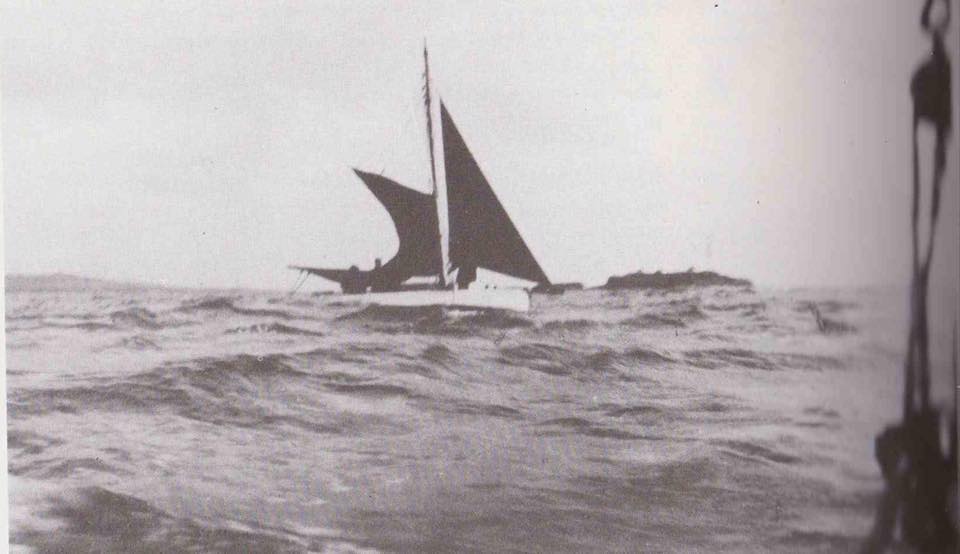
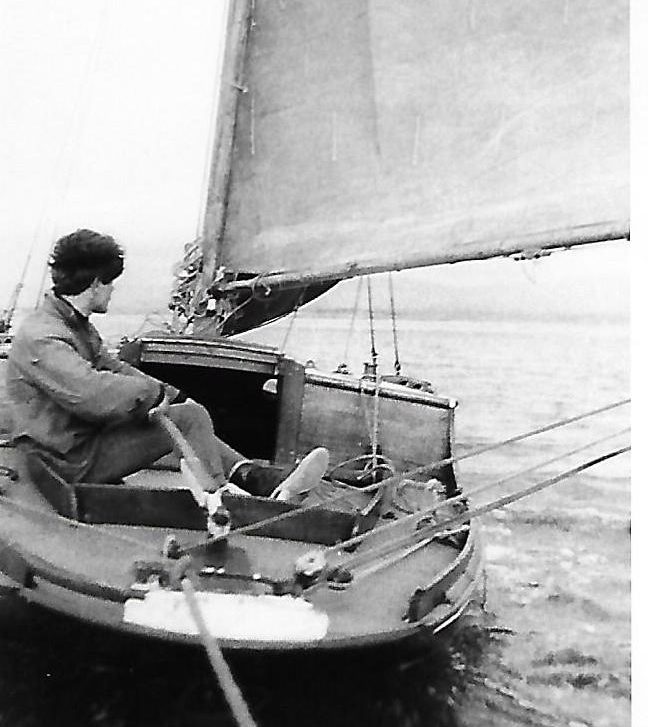
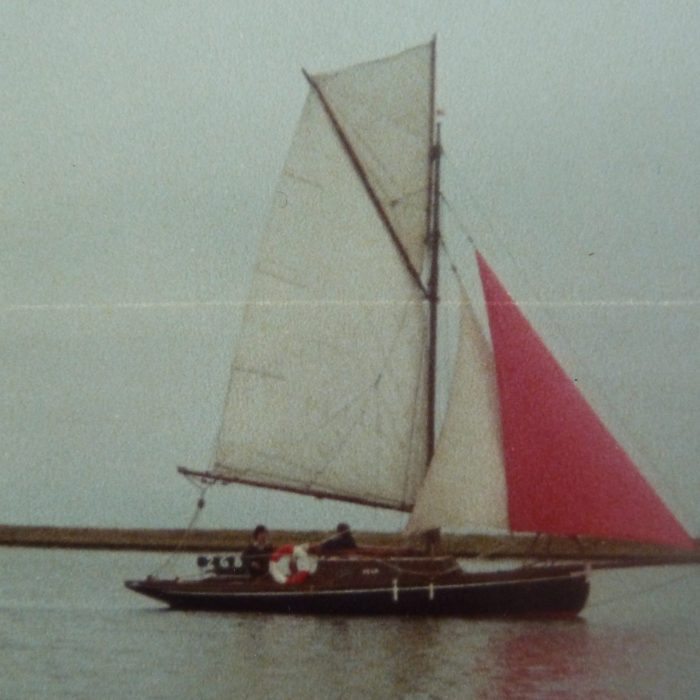
A selection of historic photographs of the Royal Mersey Rivers Class.