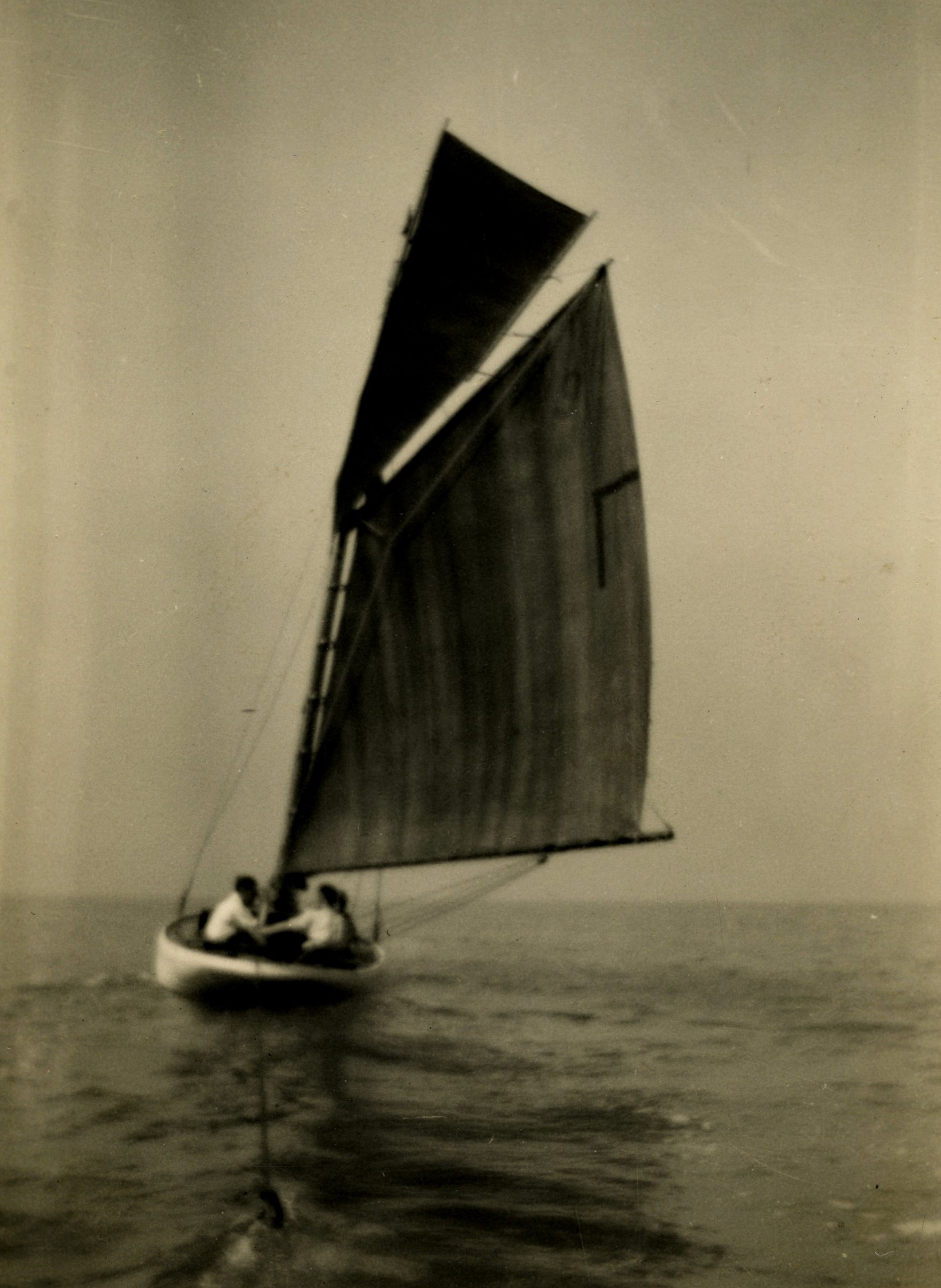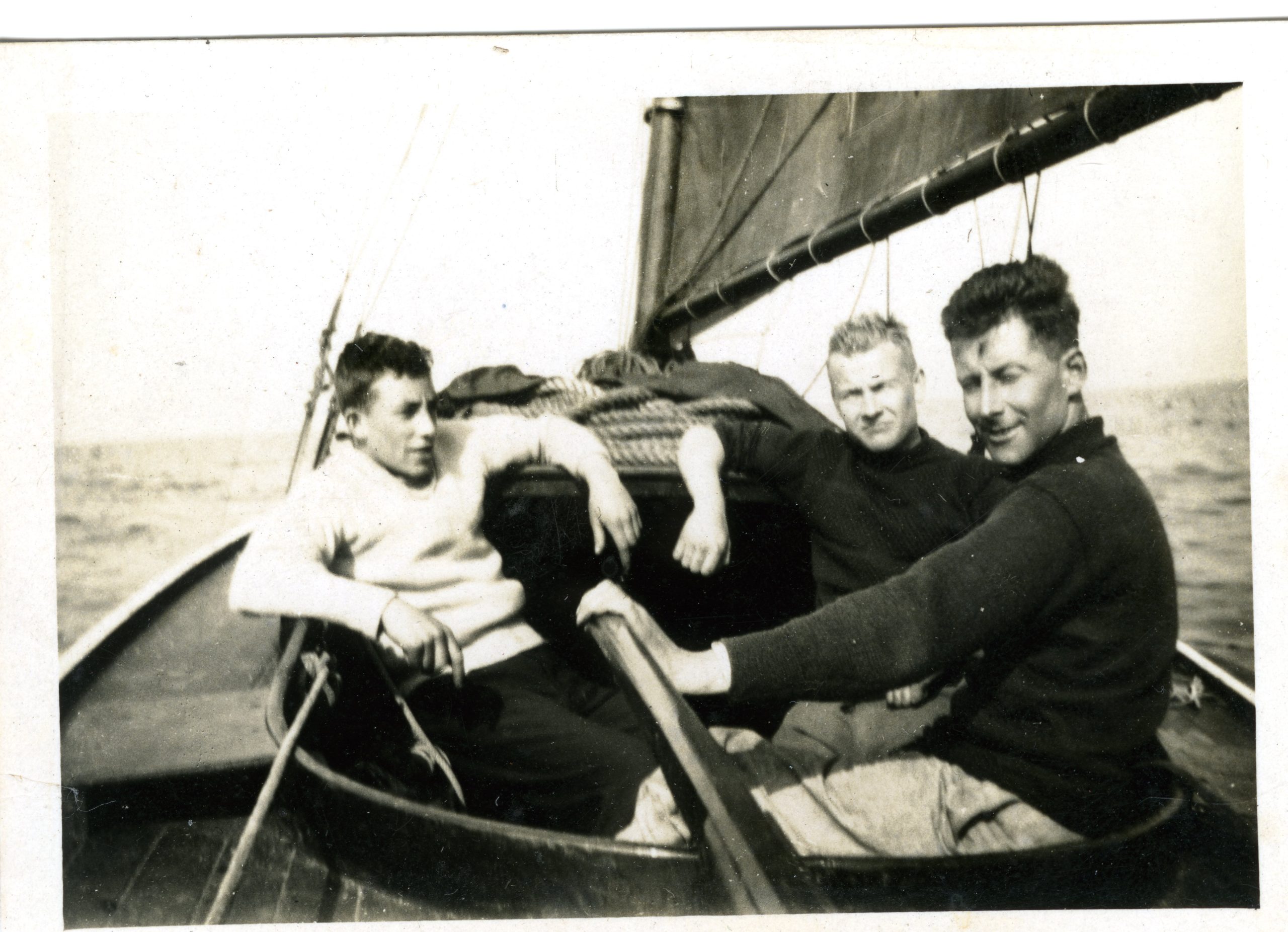
Mike Greenwood’s Uncle Eric and father Jack on board Severn in September 1928
Royal Mersey Rivers Class
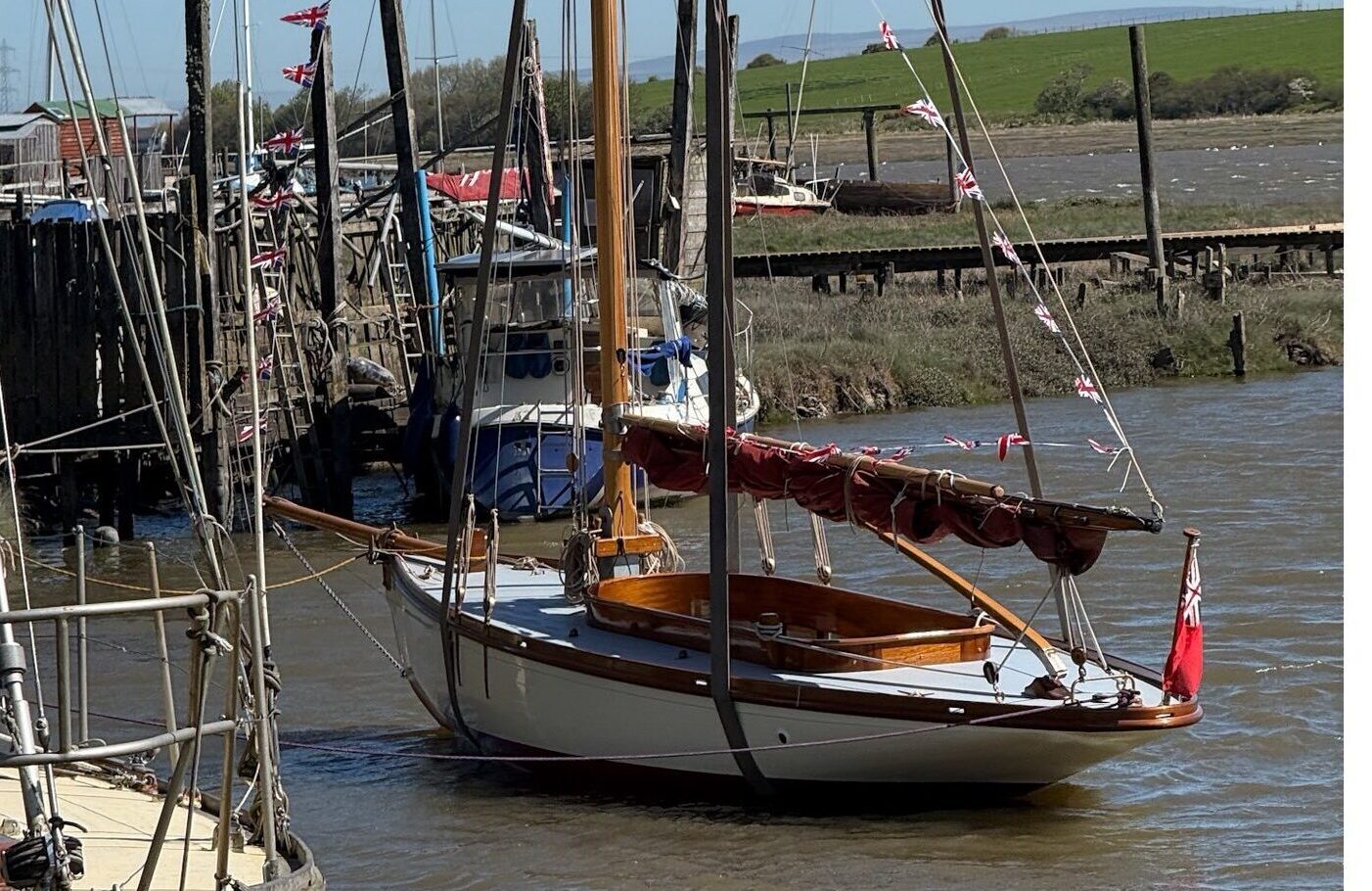
Severn is a historic wooden Rivers Class yacht, launched in 1912 and lovingly restored to sailing condition. Today she is owned and cared for by Arnside Sailing Club. She is kept at Roa Island near Barrow and visits Arnside in the summer.

Severn was launched in 1912 by William Crossfields and Sons of Arnside. Built for the Royal Mersey Yacht Club, she was one of ten Royal Mersey Rivers Class yachts — a one-design racing class created for short races on the River Mersey.
She began life as Elwy, named after a Welsh river. In 1914 she was sold and renamed Ribble. After sinking during an abandoned race on the Mersey that July, she remained on the riverbed until 1927, when she was recovered, repaired and sold. It was after this recovery that she became known as Severn.
Her later life took her from Merseyside to North Wales, then to the East Coast, before she finally returned to Arnside in 2018. Today Severn is owned by Arnside Sailing Club and has been restored and relaunched as an important surviving example of a Crossfields-built yacht.
Built by William Crossfields and Sons for the Royal Mersey Yacht Club.
Sold to Captain Harvey Broadbent and later sunk during an abandoned race.
Raised from the riverbed by the Mersey Docks salvage boat Salvor.
Bought by Joe Wallace from the Receiver of Wrecks and returned to use.
Discovered in poor condition and bought for rescue.
Purchased by Arnside Sailing Club and brought back to the village where she was built.
Moved to David Moss Boatbuilders for major restoration.
Returned to the water after restoration.
Severn was launched in 1912. Her original name was Elwy, after a river in Wales. She was one of the Royal Mersey Rivers Class yachts built by William Crossfields and Sons of Arnside for the Royal Mersey Yacht Club.
Her first owner was Lionel Yates Stott. The first Rivers Class race was held on Monday 3 June 1912, following a triangular up-river course on the Mersey. The year also placed Elwy’s launch into a wider historical moment: Titanic had sunk on 15 April 1912, only weeks before the first Rivers Class races began.
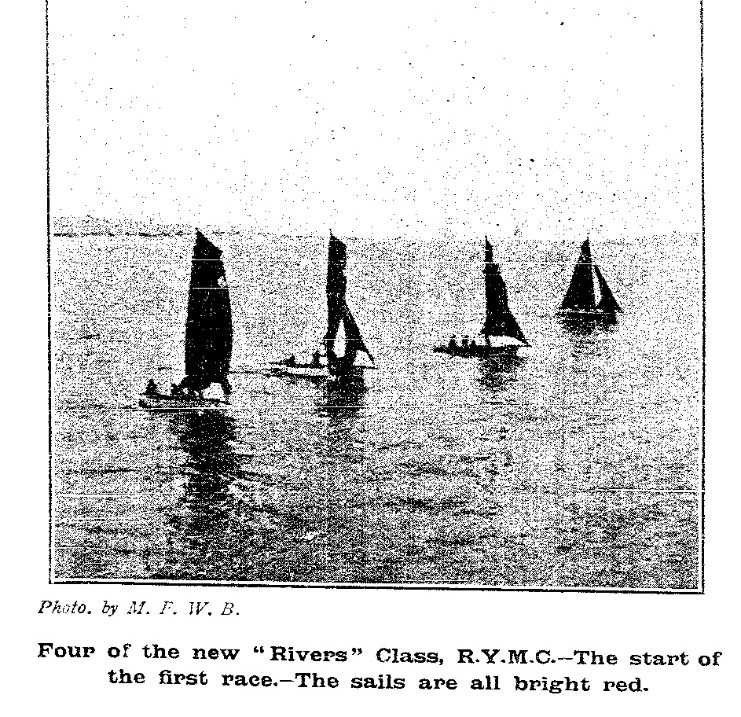
A photograph of the start of the first Rivers Class race on 3 June 1912 shows the new boats under sail. Severn, then Elwy, is thought to have had a white hull and may be one of the boats shown on the left of the image.
Lionel Yates Stott lived in West Kirby with his younger brother and sister in a large Edwardian house. His father, Samuel Stott, owned an iron foundry at Laneside in Haslingden, now Valmet, and lived at Flaxmoss House, Helmshore.
Samuel died in 1889, when Lionel was ten, leaving £27,266 — around £3.5 million in today’s values. Samuel was related to Stott and Smith, the owners of Sykeside Mill, now the site of a Tesco store. Lionel’s mother came from the Wirral, which was probably the reason the family moved to West Kirby. She died in 1906, leaving Lionel responsible for his younger brother and sister.
Lionel was a qualified master mariner. Along with three other Rivers Class owners, he joined the Royal Naval Reserve as a lieutenant on 5 August 1914, the day after Britain entered the First World War. He later transferred to the RAF and by the end of the war had reached the rank of Captain.
Lionel died in Conwy in 1944. His aunt Frances, who left ancient Egyptian, Greek and Cypriot artefacts to Leeds Museums, was cited in a Victorian divorce case.
In 1913 Elwy was joint winner of the Rivers Class series with Styx, winning the Belcher Cup. The cup had been donated by the owner of Styx, E. C. Belcher. Because he had donated the trophy, Belcher passed over his right to share it, allowing Elwy to take the cup.
Elwy won races on 23 May, 23 June and the Regatta Race on 28 June. Her prize money for the year was £10 10s, around £1,700 in 2026 prices.
In 1914 Elwy was bought by Captain Harvey Broadbent, commandant of HMS Conway, and renamed Ribble. HMS Conway was a merchant navy training school based in an early nineteenth-century ship of the line moored at Rock Ferry, close to the Royal Mersey Yacht Club.
 Captain Harvey Broadbent RNR was Captain Superintendent of HMS Conway from 1903 to 1927, having previously served as First Officer from 1898 to 1903. He had himself been a cadet with HMS Conway in 1880.
Broadbent’s merchant navy career was mainly in the Far East, first with Galbraith, Pembroke and Co. and then with the Bibby Line. Between 1894 and 1895 he served as an acting lieutenant RNR on the China Station. In 1896 he was appointed second officer of RMS Etruria, a transatlantic liner and Blue Riband holder owned by Cunard. During his time with Etruria, Broadbent received several awards for his part in rescuing the crew of SS Millfield, which sank off Ireland in stormy weather in 1897.
As commandant of HMS Conway, Broadbent transformed the ship’s facilities and updated both the syllabus and daily routine. He was described as, at first sight, a terrifying man whose look could freeze you to the deck. Once cadets became used to his mannerisms, he endeared himself to them, while remaining highly respected. He was also involved in setting up the London Company of Master Mariners and the Seven Seas Club for Merchant and Royal Navy officers.
The summer of 1914 unfolded against the background of growing European tension. On 28 June, Archduke Franz Ferdinand, heir to the Austrian throne, was shot in Sarajevo, though in Britain the main political issue remained the Irish question.
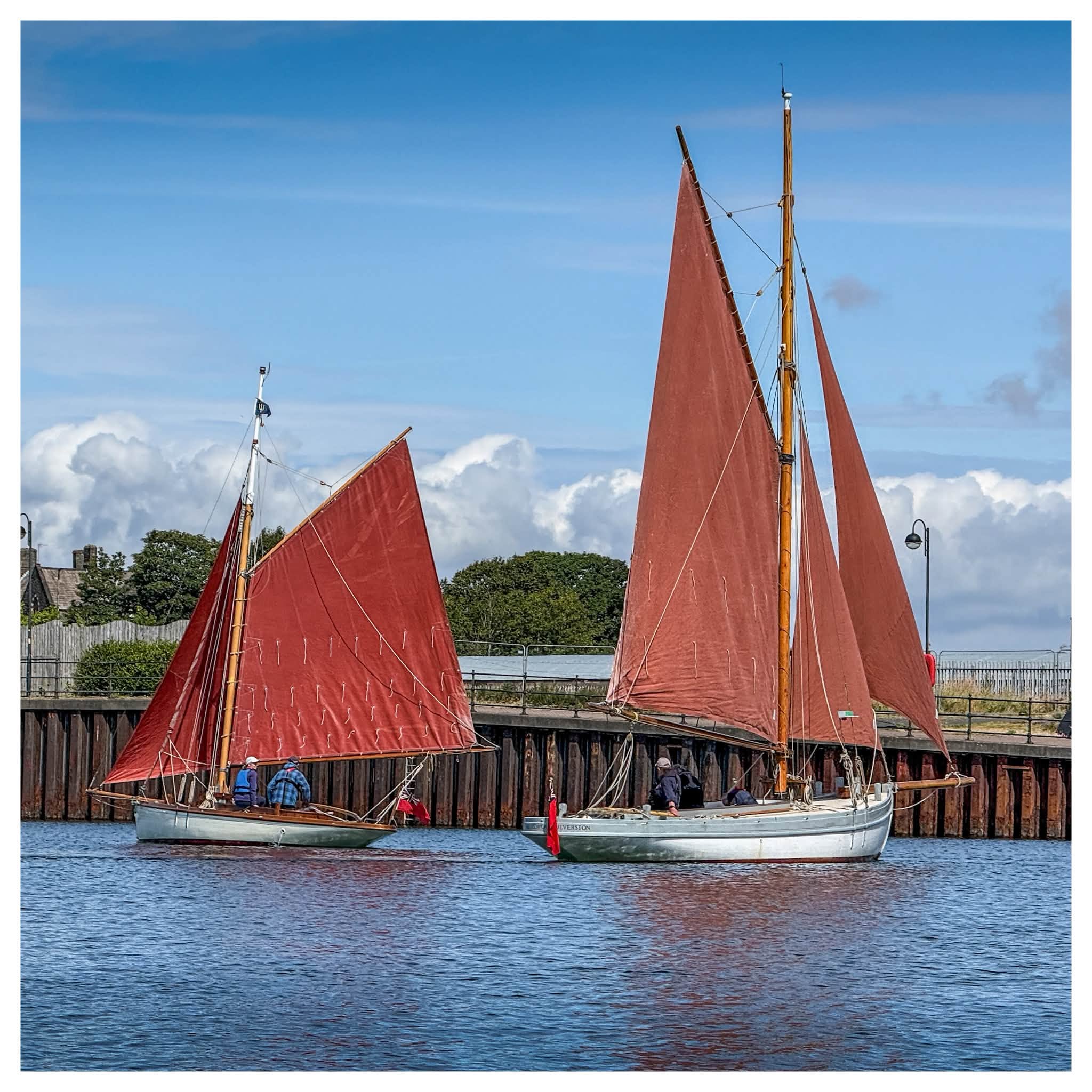
On 18 July 1914 the Royal Mersey Regatta took place in glorious sunshine, with 84 yachts taking part and offering a fine display of sailing. According to the Birkenhead News, the crimson sails of the Rivers Class were much admired by the spectators, including ladies watching from the steamer.
On 23 July 1914 Ribble capsized and sank while rounding a mark off Herculaneum Dock, Dingle, on the Liverpool side of the Mersey. The race was being sailed in windy conditions and was abandoned. The crew, made up of Commander Broadbent and two cadets from HMS Conway, were rescued.
On the same day Austria delivered its ultimatum to Serbia. The main news story in Britain was still the Buckingham Palace Conference on Irish Home Rule. On 28 July Austria declared war on Serbia. On 2 August Germany invaded Luxembourg and Belgium. On 4 August Britain declared war.

Ribble remained on the bed of the Mersey until 1927, when she was rediscovered at Rock Ferry. The boat was craned to the surface by the Mersey Docks salvage boat Salvor.
Reports suggest that the yacht was found in good condition, with all equipment intact except for the sails.

In 1928 she was bought from the Receiver of Wrecks by Joe Wallace, a 24-year-old member of West Cheshire Yacht Club, New Brighton, for £25 — around £2,100 in today’s prices. Wallace renamed her Severn.
Joe Wallace, or Joseph Wallace, was born in New Brighton in 1902 and was a member of West Cheshire Sailing Club. His father was a salesman. Joe may have been taught to sail by Mr W. Hepponstall, an artist’s colourman.
With his friends, he got Severn ready to go back in the water, making new spars for her and repainting the boat.
After Severn, Joe went on to buy larger yachts, including Ikinoo in 1931 and Isabella in 1934, both of which he sailed to North Wales, the Isle of Man and Ireland. He took part in the Isle of Man Midnight Race in 1932 and 1933 in Ikinoo.
The Greenwood brothers crewed for Joe in both Severn and Ikinoo. Their voyages in Ikinoo are recorded elsewhere. Joe’s photo albums were discovered in the attic of West Cheshire Sailing Club in 2018. Other photographs come from albums inherited by Mike Greenwood.
Joe later became Commodore of West Cheshire Sailing Club.
In 1928 Joe sailed Severn from New Brighton to Rhyl at Whitsun with friends including the Greenwood brothers. They slept on board Severn overnight. At this time the boat was open-decked, though a small cuddy gave some shelter.
In 1929 Joe again sailed Severn with friends to North Wales at Whitsun, stopping at Mostyn.
Severn is next recorded in 1939.She came second in a race at Blundellsands Sailing Club, near Formby, and first in the handicap race at West Cheshire Sailing Club Regatta at New Brighton. Her owners at this time were F. S. Allsop and S. J. Corrigall.
Trawsfynydd was the only inland nuclear power station in the UK, with cooling water supplied by Llyn Trawsfynydd, a man-made lake. The power station closed in 1991, with decommissioning expected to continue until 2083. In 2021 the Welsh Government announced plans to redevelop the plant using small-scale reactors to help meet UK carbon-emission targets.
In 1972 Severn was advertised for sale by Alec Taylor of Plas Mor, Borth-y-Gest, a village on a sheltered bay south of Porthmadog, for £650 — around £11,500 in 2026 prices.
The Gaffers Log 1972/1 sale notice described her as:
“SEVERN 23′ River class prawner (similar Deva). Gaff sloop, built 1913, pitch pine on oak. V.G. condition. New keel bolts, 4 h.p. Stuart rebuilt. Terylene sails, plus topsail. Unused new 13 oz. cotton trysail. Lying Borth y Gest. £650.”
It is possible that Alec knew Jon Wainwright, owner of Deva, Severn’s sister yacht. Deva was kept at Port Dinorwic on the Menai Straits between 1964 and 1966. Jon’s trip in Deva across the country via the Leeds-Liverpool Canal in 1966 might been have inspired by Alec’s trip from Chester to London. Jon’s trip was also recounted in Gaffers Log. Jon took at least one picture of Severn whilst she was in North Wales. By 1972 Deva was already making a name for herself in East Coast races.
After being advertised for sale in 1972, Severn was bought by Mr John Gaynor of Leigh Park Road, Leigh-on-Sea, near Southend. Leigh Park Road is a road of large Edwardian houses overlooking the bay. For a short time Severn was called Rosevern.
In 1976 she was advertised for sale by Mr Gaynor for £1,100, around £10,500 in 2026 prices. The boat details included a cooker and toilet.
The Gaffers Log 1976/1 sale notice described her as:
“SEVERN (509) 23′ x 7′ x 3′. Rivers Class Morecambe Bay Prawner. Built Crossfield of Arnside 1912, sister to Deva. Stuart P5, 2 sets sails, 2 berths, cooker, loo, rotary bilge pump, seafarer, carvel, pine on oak. Fast boat in good condition. Survey 1974. £1,100.”
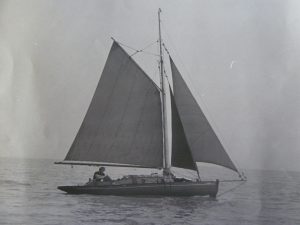
She was sold to Ken Tomlinson of Hockley, north of Southend in Essex, and kept at Paglesham a remote village on the Roach Estuary, south of Burnham-on-Crouch. The picture below shows Severn when owned by Ken Tomlinson.
Ellen MacArthur learnt to sail at Paglesham, starting at the age of 4 in 1980 on her Aunt’s boat when Severn would have been moored there.
In 1977 Severn was spotted at Paglesham by Peter Booth of West Kirby and Perry’s Sailmaker. In 1978 she was surveyed at Paglesham on the Roach Estuary on behalf of Ken Tomlinson. Perrys had supplied Joe Wallace with Turkey Red sails for Severn in 1928.
In 1984 Tomlinson advertised Severn for sale for £2,000. The Gaffers Log 1984/1 sale article described her as:
“SEVERN (509) Royal Mersey Rivers Class, one of 30 built on Morecambe Bay Prawner lines by Shuttlewood of Arnside in 1912. 23′ x 6’6″ x 3’ +7’ bowsprit, pitch pine on oak. Gaff cutter rig with jib headed topsail. Spartan accommodation for two, Stuart Turner 8 h.p. engine. Much admired & with most interesting history. £2,000.”

Lou Perrotta
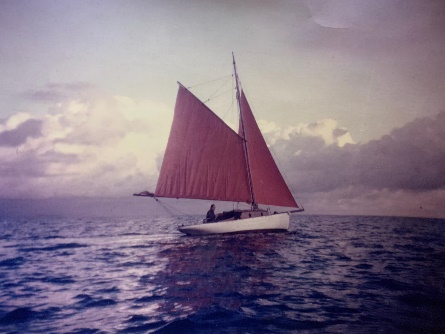
In the mid 80s Severn was brought by Lou Perrotta a young American woman with two children for £750 – about £2000 in 2026 prices, using a small sum of money she had inherited. The above photo shows Lou and family on Severn in 1984. There may have been intervening owner between her and Ken Tomlinson. She saw Severn at Heybridge Basin, near Maldon, on the River Blackwater being bailed out by the disconsolate wife of then owner because the caulking had fallen out during the winter.
Lou put in a low offer and became the proud owner of Severn. With little experience of boat maintenance and a lot of enthusiasm, she fixed the caulking, burnt off the old paint and repainted the boat. With advice from a fellow boat owner she replaced the stem at front of the boat, which have become lose with a new laminated one. She changed the hull colour from green to white, as she was told green was unlucky.
Jon Wainwright recounts taking part in a race in 1986 that also involved Severn in his book. Deva beat Severn.
In 1988 Severn took part in the East Coast Old Gaffers Race, which started from Stone Sailing Club on the south side of the Blackwater Estuary below Maldon.
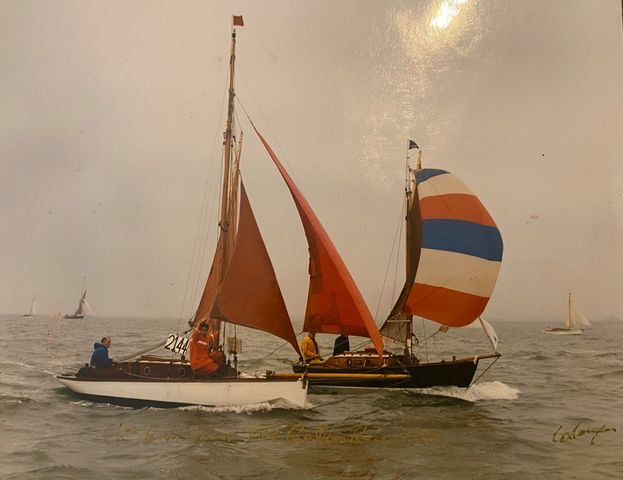
In 1997 Severn was sailed from Walton-on-the-Naze to Otterham Creek, near Gillingham in Kent, on the River Medway, taking 9 hours to do the voyage in light wind conditions.
Severn remained in Kent till 2013

Rediscovery
Severn was discovered by David Pierce a resident of Leigh-on-Sea in poor condition in 2013. He buys here for £1000 taking her back to Essex
David moved Severn to Sutton Wharf Marina at Rochford in Essex, on the other side of the Thames Estuary. Over the next two years, from 2013 to 2015, he restored her with the help of two retired shipwrights.
Work done includes a new deck and cabin roof. New wooden pieces are put on either side of the frames to help support them
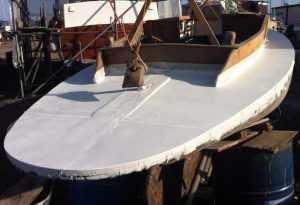
On completion of the work, Severn is moored and sailed in the Roach Estuary.
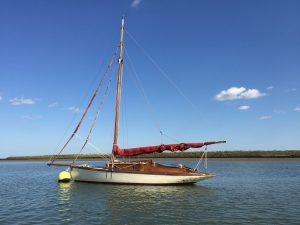
In 2016 Severn is advertised for sale at £5500. (£8000 at 2026 prices)

In 2018 Severn was bought by Arnside Sailing Club for £5,500. The purchase was funded by a £10,000 grant from the Heritage Lottery Fund, made possible by National Lottery players.
Severn was relaunched at Arnside on 18 June 2018. She returned to the village where she had been built in 1912, more than a century earlier.
A video was made of Severn’s arrival in the village. A photograph of her appeared in the Guardian in an article about tides. Three pictures of Severn were made by different artists, and numerous photographs were taken of her return.
However, Severn was taken out of the water before the end of the season because of concerns about her condition and structural integrity.
In 2020 a condition survey was carried out by Windermere Jetty Museum. The survey highlighted the need for major work before Severn could be put back in the water, including replacement of her internal framework. Lack of money and Covid delayed the start of any work

BBC Villages by the Sea, Arnside
In 2021 she featured in a BBC Villages by the Sea Programme about Arnside. With Luna (now Lunetide) singing the “Severn Song” in front of the boat at the end of the programme.
“The Severn Song” was written by Mike Greenwood whose Uncle Eric and Father, Jack sailed in Severn with Jo Wallace in the 1920s
The programme highlighted Arnside’s Maritime History and includes shots of the inside of the Crossfield Boatyard where she was built.
To view the programme BBC Villages by the Sea Arnside
Quotes were taken from four boatyards to restore Severn, with David Moss Boatbuilders at Skippool near Blackpool putting in the lowest tender. In April 2022 confirmation came through The National Lottery Heritage Fund had awarded a grant enabling the restoration to go ahead. This was supported by further grants from other funders
Following the award of grant funding in April 2022, David Moss Boatbuilders at Skippool were awarded the restoration contract. Work started on the restoration in Autumn 2023. The restoration was completed three and a half years later in April 2026. In total the restoration cost was £160,000.
You can read more about the restoration in the final section. There are also videos to watch.
Severn was saved again

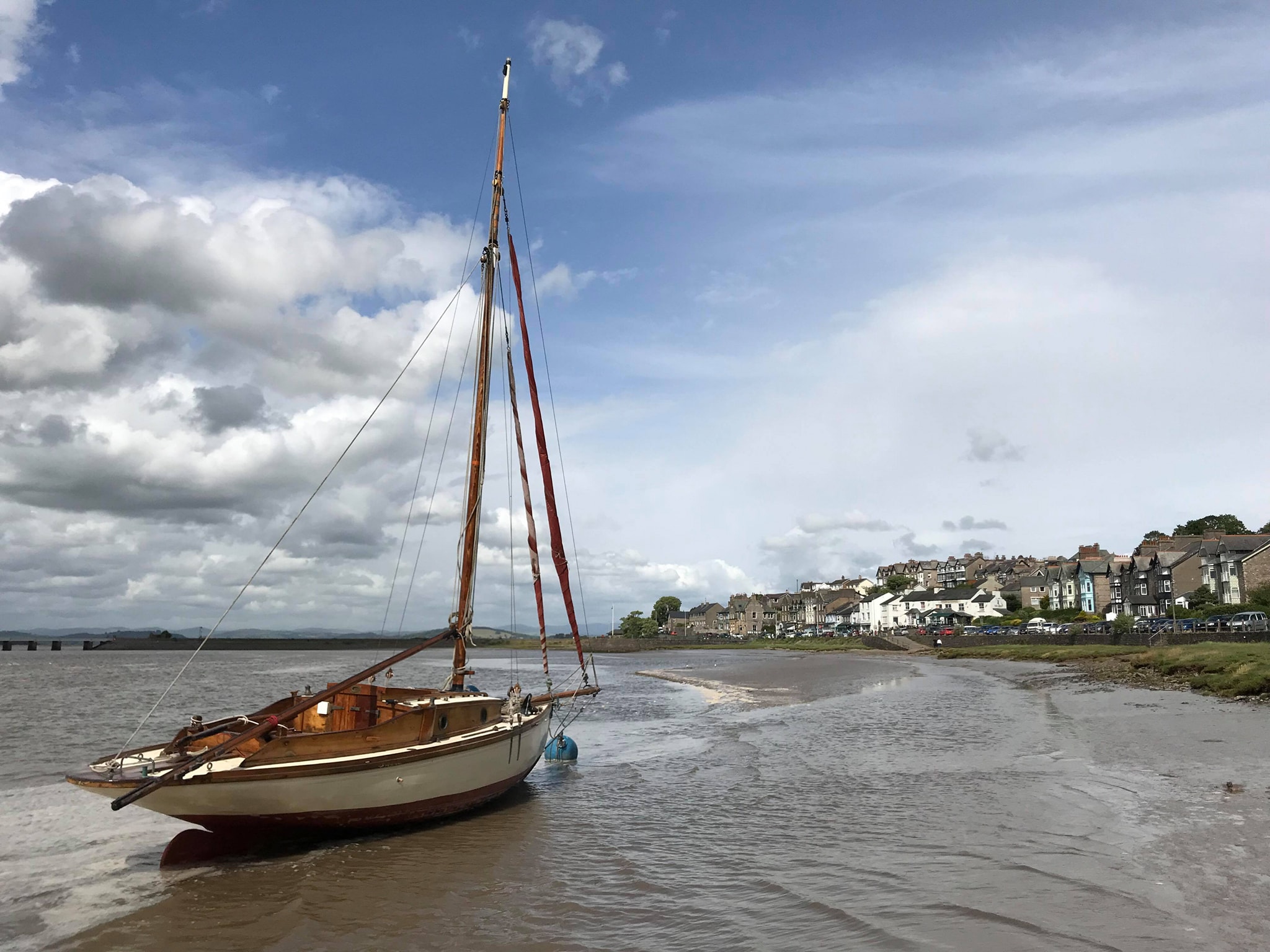
Severn is based at Roa Island near Barrow-in-Furness. She comes out to Arnside on a regular basis. Roa Island has deeper water than Arnside meaning that Severn can be sailed more regularly there.

In June 2026 Severn featured in ITV Granada Reports New Story

To view the news item Severn Granada Reports
In August 2026 Severn attended the Royal Barrow Festival of the Seas.

She came up to Arnside for the first time following her restoration on Sat 29th August making the difficult voyage across Morecambe Bay.

Severn arriving at Arnside
If you would like to get involved with Severn see the Sailing Club’s Website
The Severn Song was written by Mike Greenwood whose father and uncle sailed with Joe Wallace on Severn in the 1920s
Mike Greenwood’s Uncle Eric and father Jack on board Severn in September 1928

Between 2022 and 2026 Severn was restored by David Moss Boat Builders at Skippool Creek near Blackpool at the cost of £160,000 to very high standard with funding from The National Lottery Heritage Fund, other grants and donations. Severn was returned to her original appearance with an open cockpit rather than cabin
The restoration included replacing the internal framework that hold the boat together, repairs to the boats backbone, rebuilding the boat’s stern, a new hollow mast, a new cockpit, re-decking the boat, caulking, a new engine, navigational and safety equipment.
In detail the restoration included
a) Replacing the internal frames
All the frames were replaced. Severn has thick sawn frames and thinner steamed framed. The sawn frames are sawn to shape whilst the steamed frames are steamed then bent to fit. The old frames were either soft, rotten, cracked or split. Some had come apart from the hull. In places the frames have been doubled up with sister frames put in to support the original frames. These too have deteriorated over time.
The sawn frames were replaced with laminated frames made of thin strips of wood glued together which are structurally stronger In between the sawn frames, new steamed frames were installed. To enable the frames to be accessed the cabin and old deck needed to be removed.
Before images of framework


b) Repairs to the boat’s backbone. The boat’s backbone was rebuilt and the iron keel, which weights 1/2 tonne reconditioned. The backbone includes the stem at the front of the boat, which takes the full force of the waves, iron keel, keelson, to which the keel is attached by bolts and stern post.
Keelson and new frames


c) Rebuilding the boat’s stern counter – The boat’s stern counter was rebuilt as many of the hull planks were rotten.


c) New mast – A new hollow mast was constructed. This is lighter and stronger than a solid mast. It is fitted to a tabernacle on the deck making it easier to raise. Previously the mast needed a crane to lift it in.
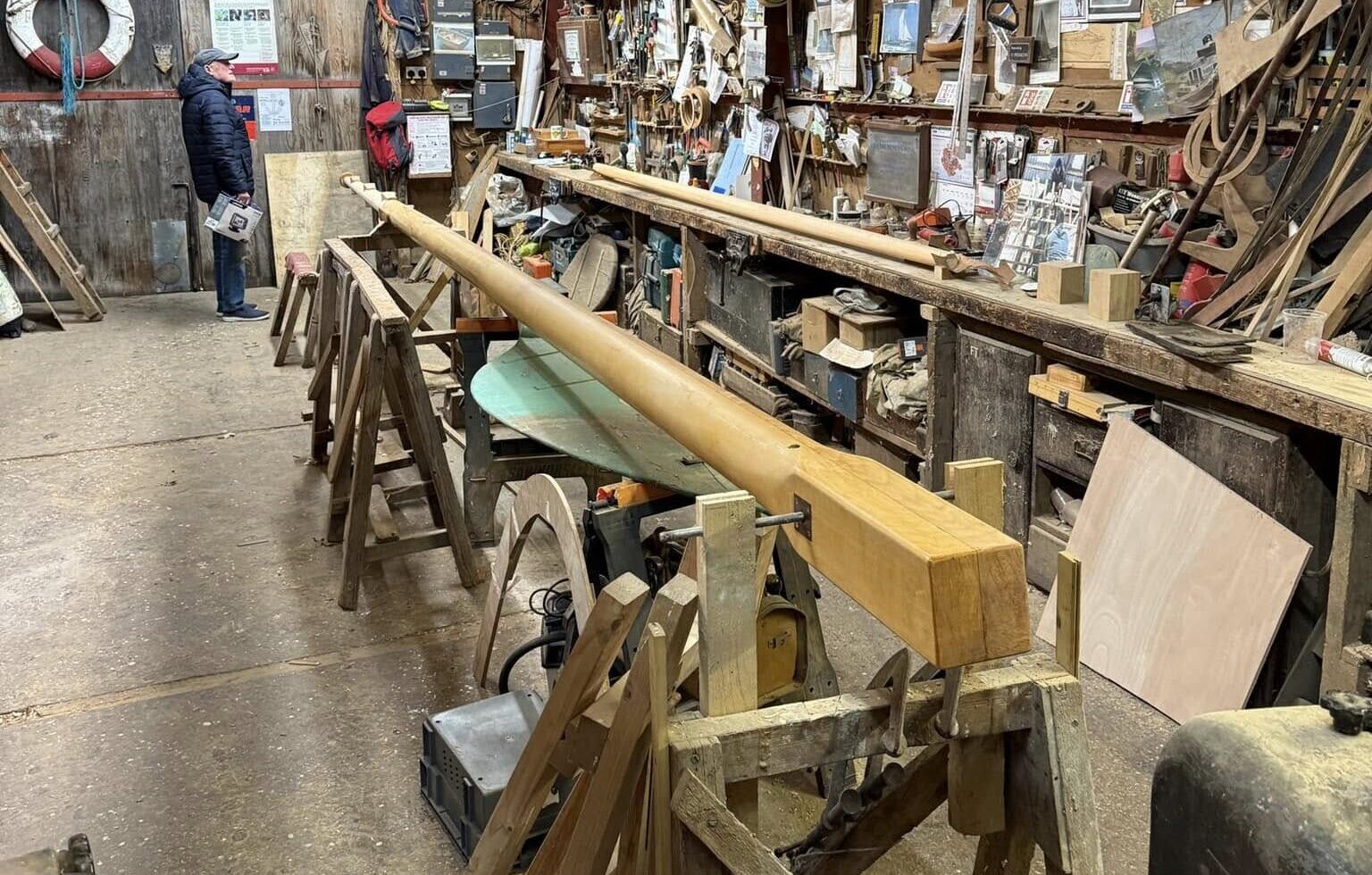
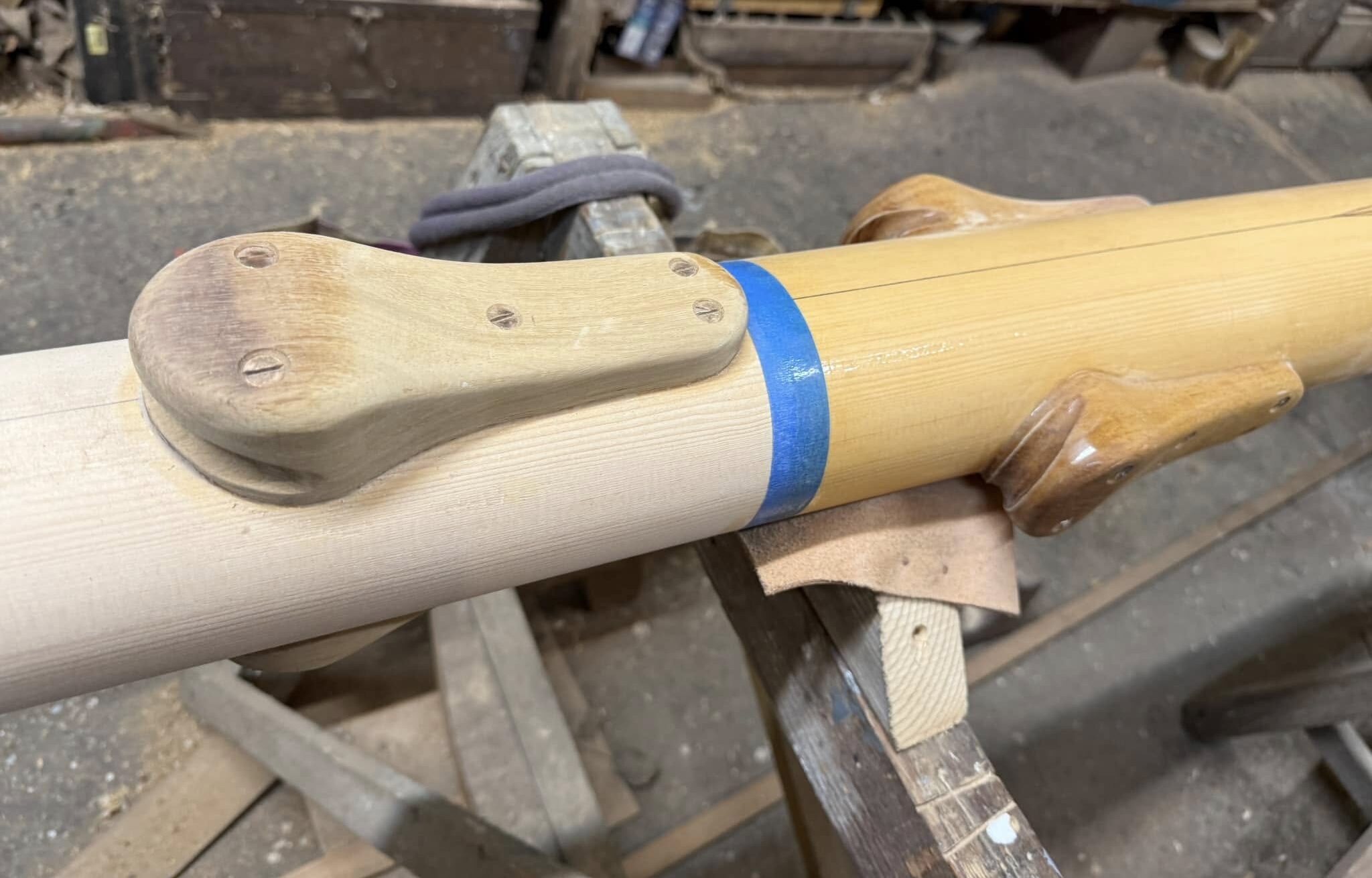
e) New deck – A new deck and beam supports were installed
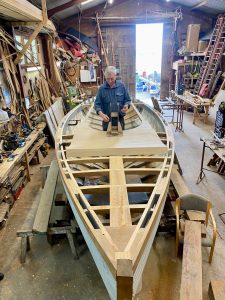

f) New cockpit – a new cockpit was created with seating and shelving for storage
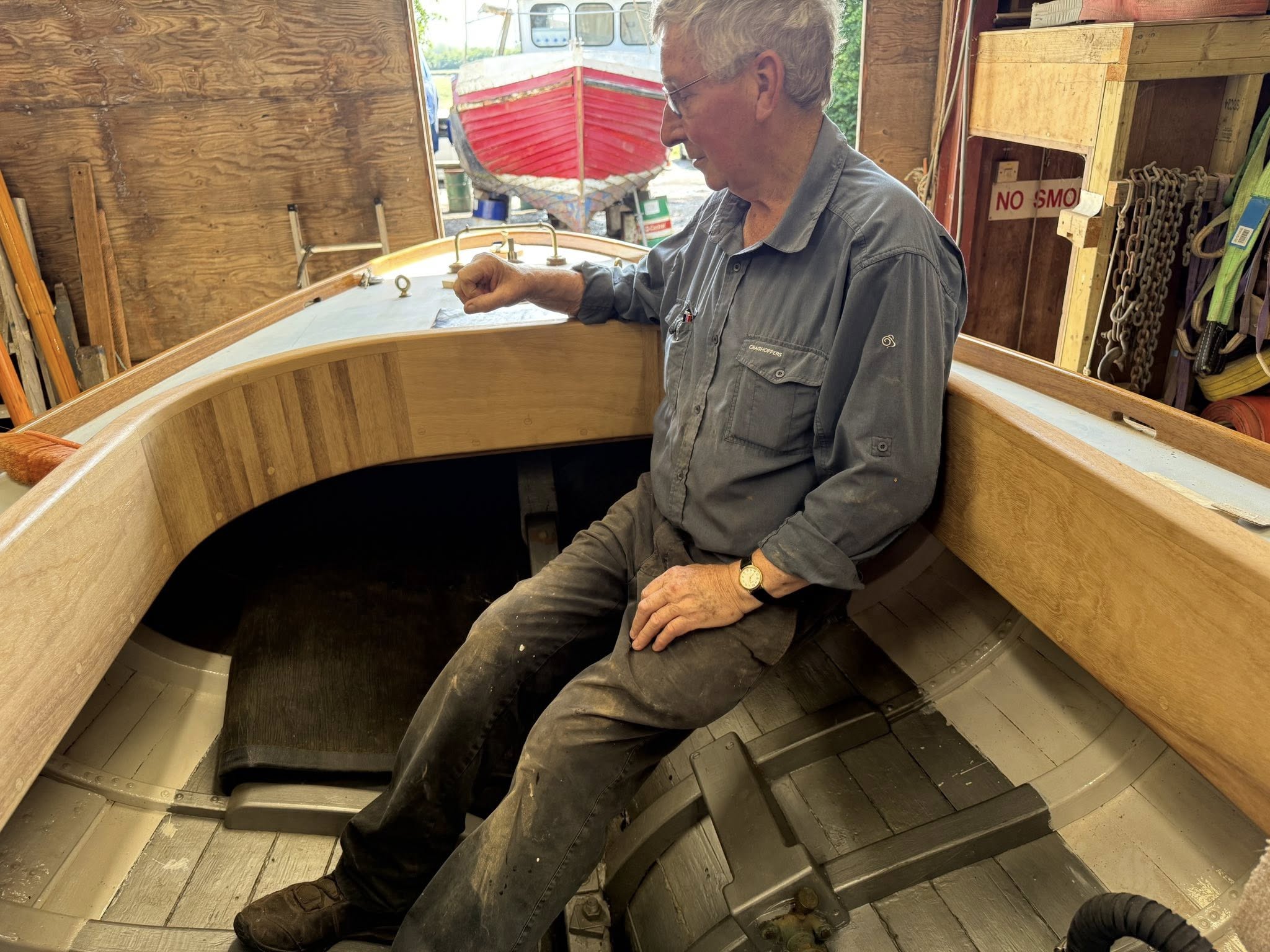
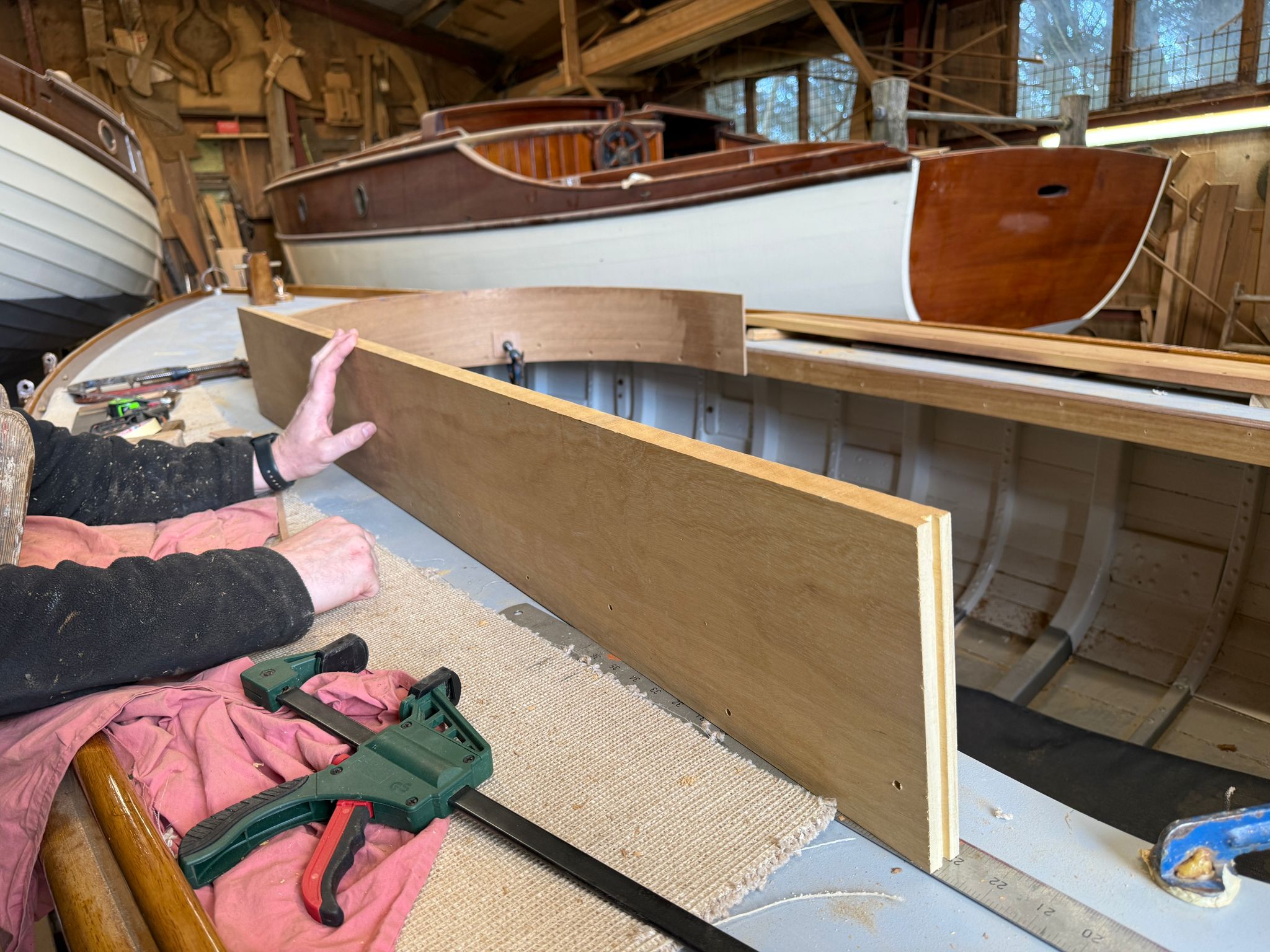
g) Combing – Laminated combing was installed round the cockpit. The combing needed to be bent to shape. The combing helps reduce the chance of crew falling out of the cockpit and water from waves getting in.
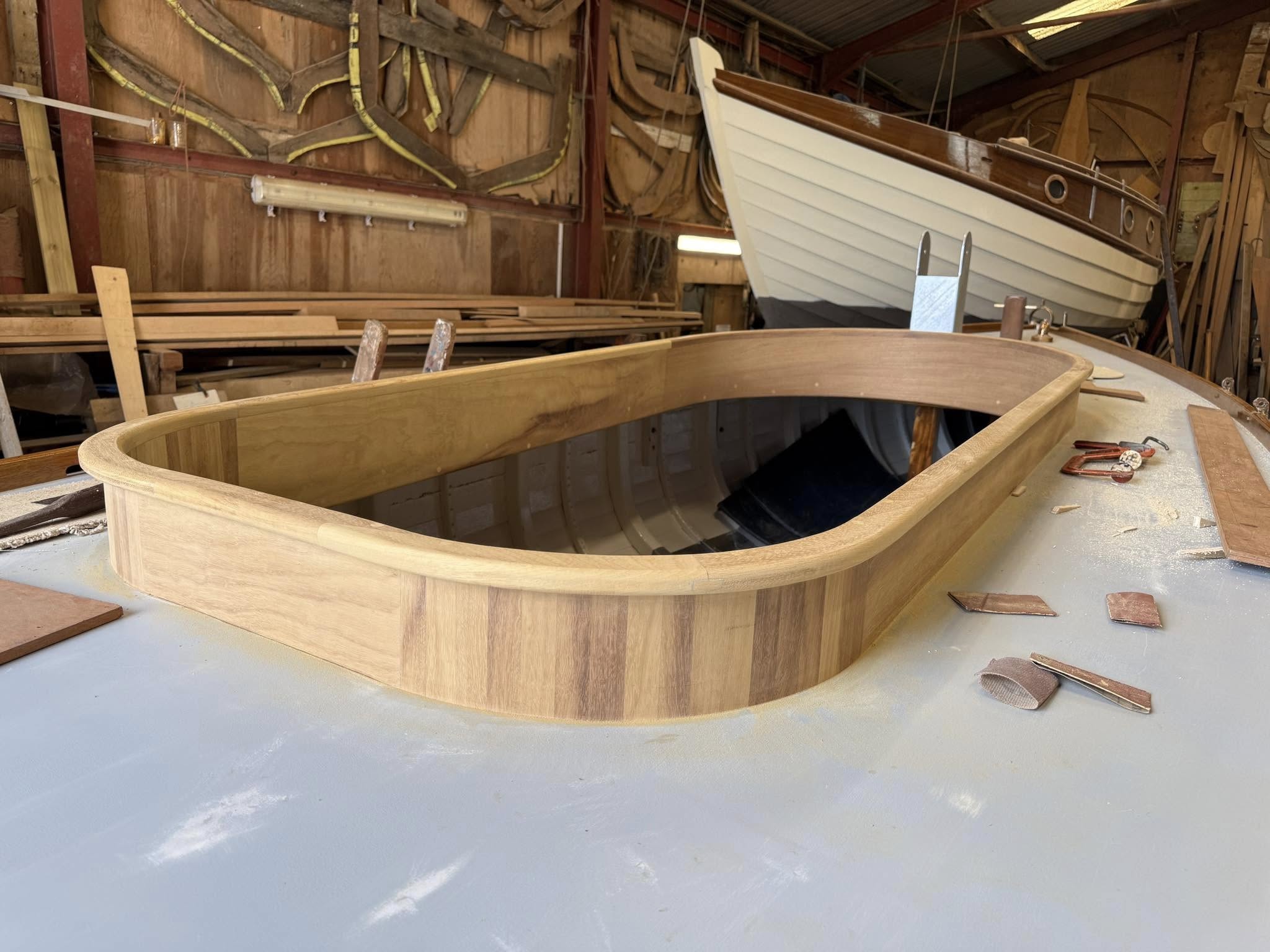
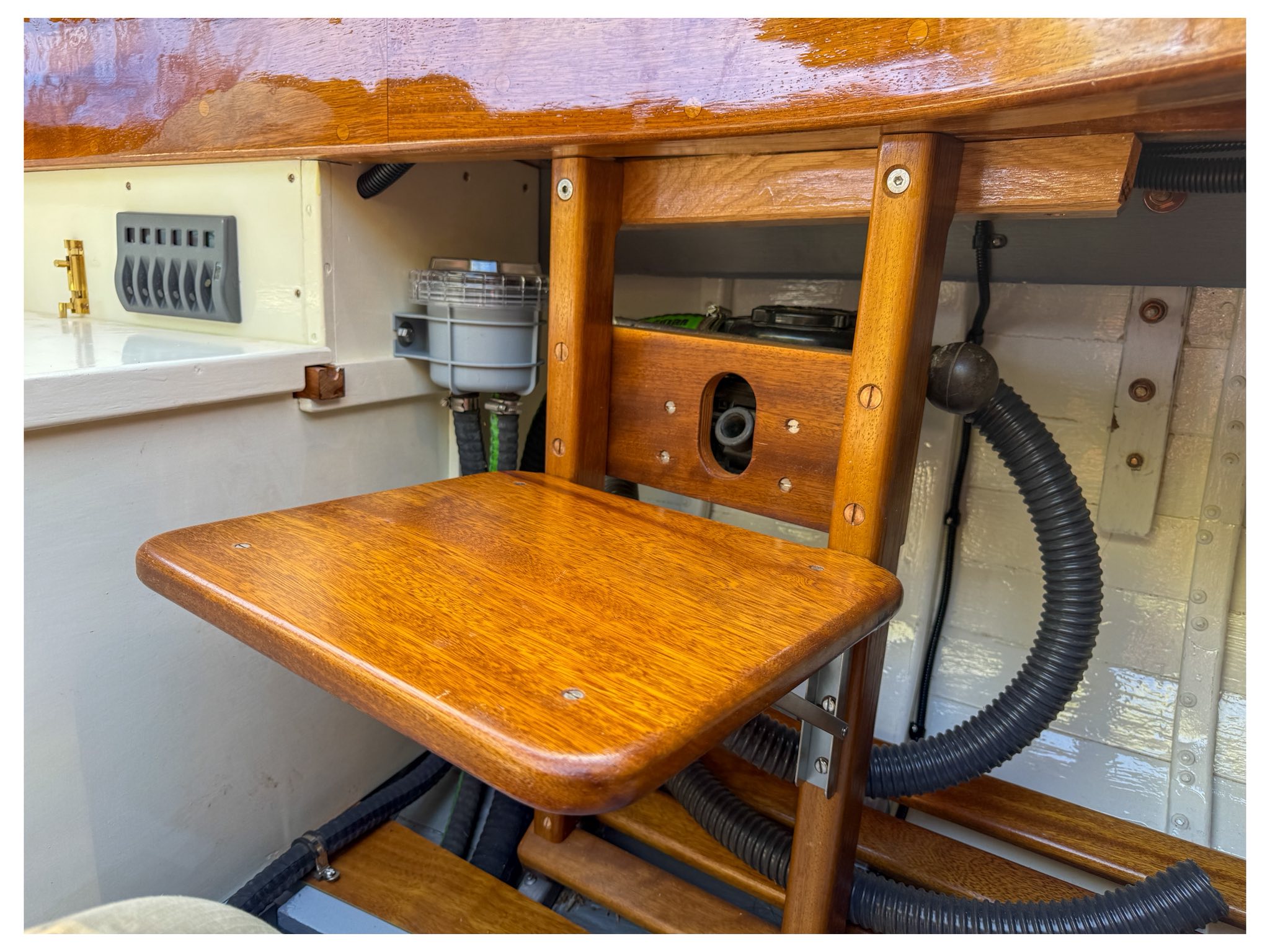
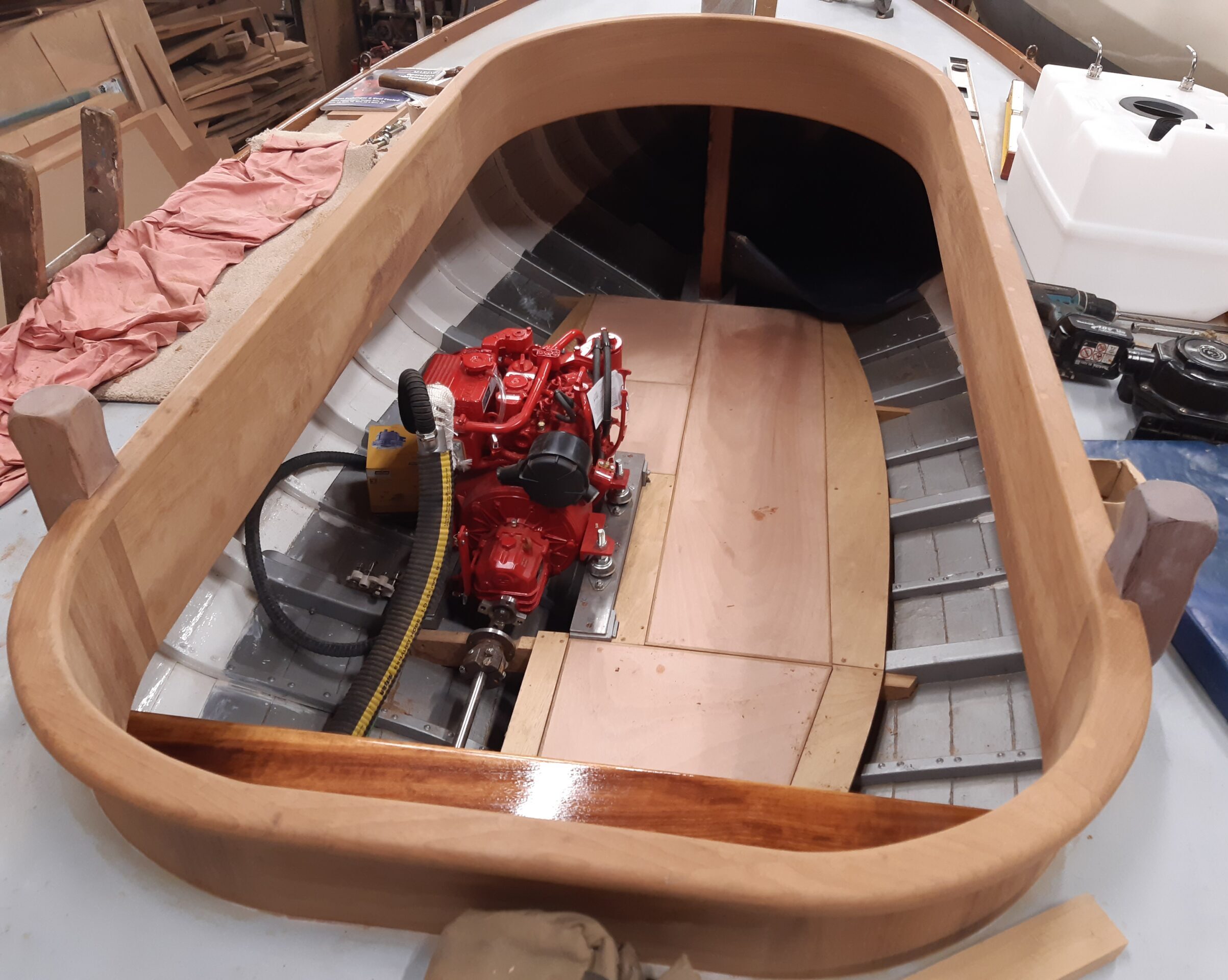
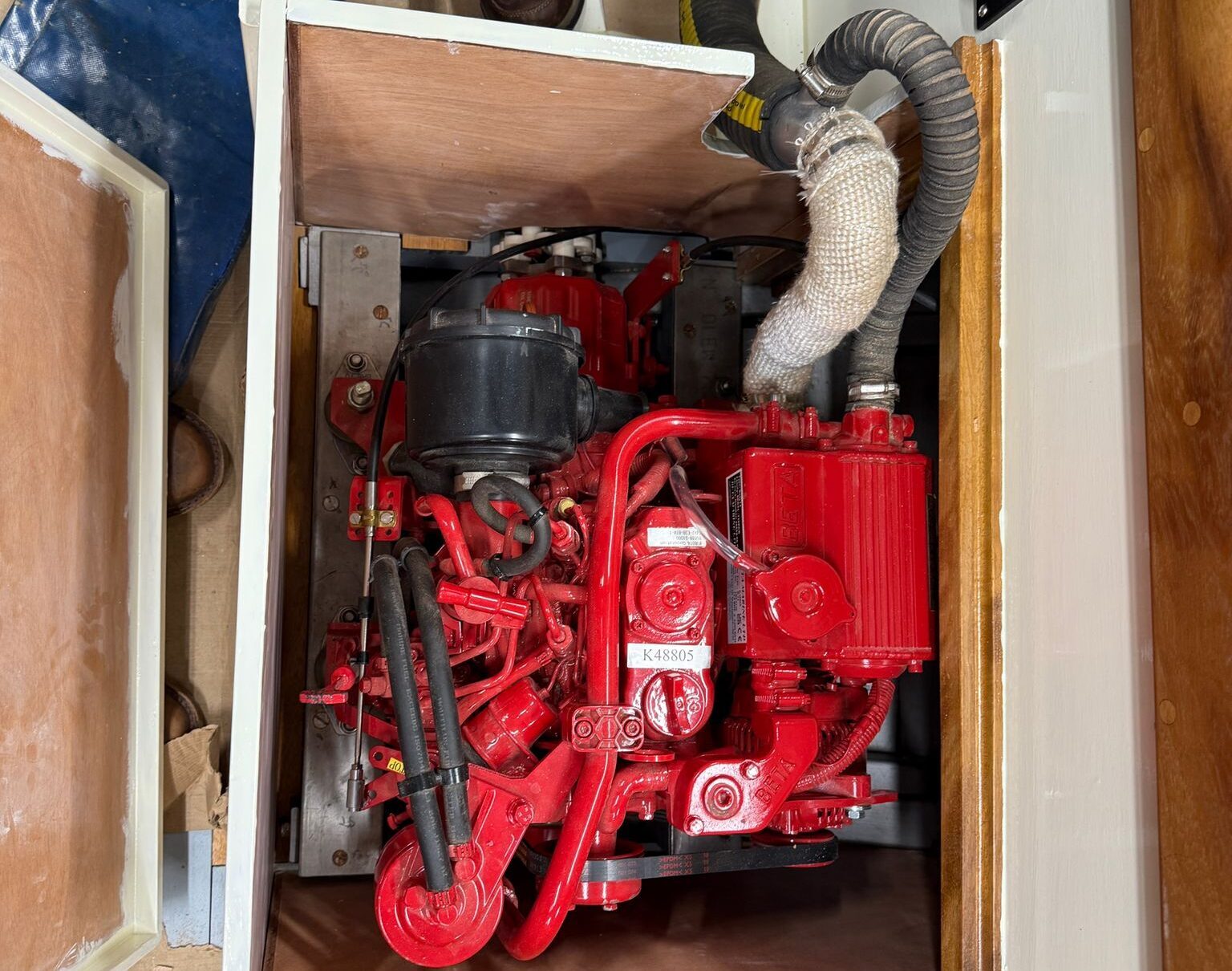
h) New engine – a new engine, fuel and exhaust lines, fuel tank and bilge pumps were installed. A new engine compartment and battery compartment had to be built.
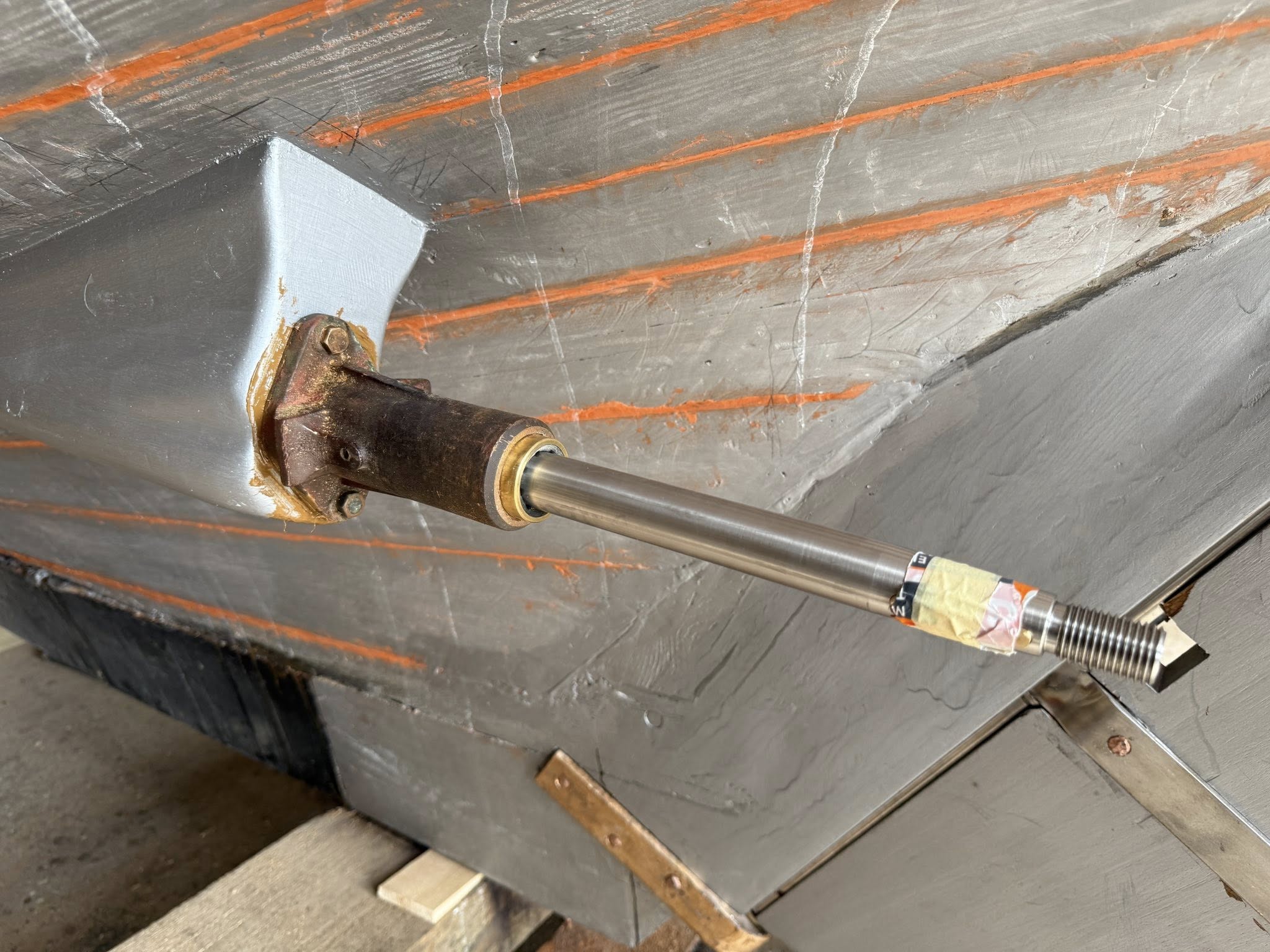
i) New propeller – A new feathering propeller and shaft were installed. Feathering propellers that folds in when not in use reduces drag while sailing, improving sailing performance and fuel efficiency. They also provide better thrust in reverse helping with close maneuvering.
j) Navigational and Safety Equipment – So we can sail her safely navigational and safety equipment complying latest advice was installed
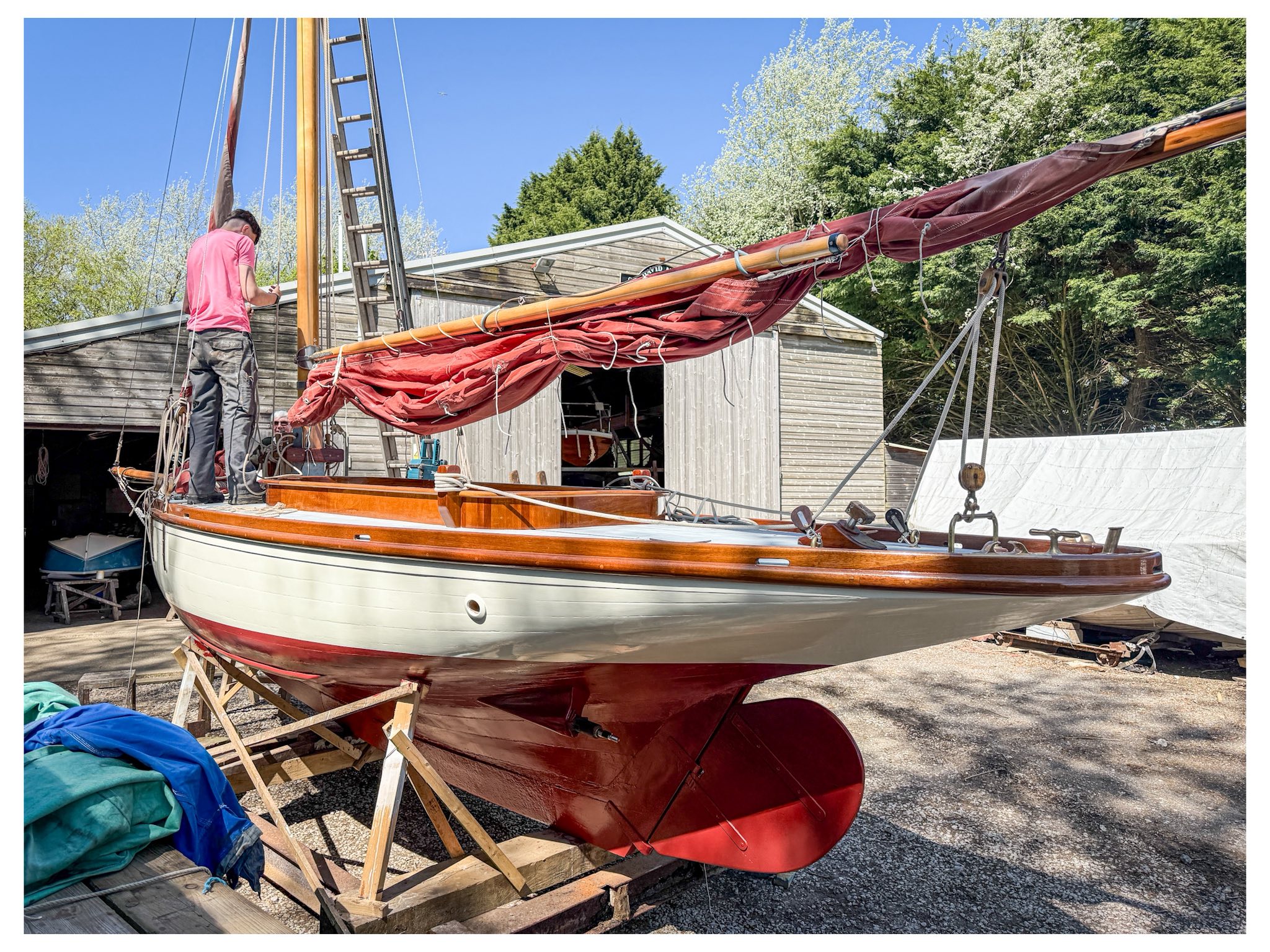
k) Caulking, Painting and Varnishing – The hull planks needed caulking to stop water seeping through. Severn required multiple coats of paint and varnish with sanding between coats.
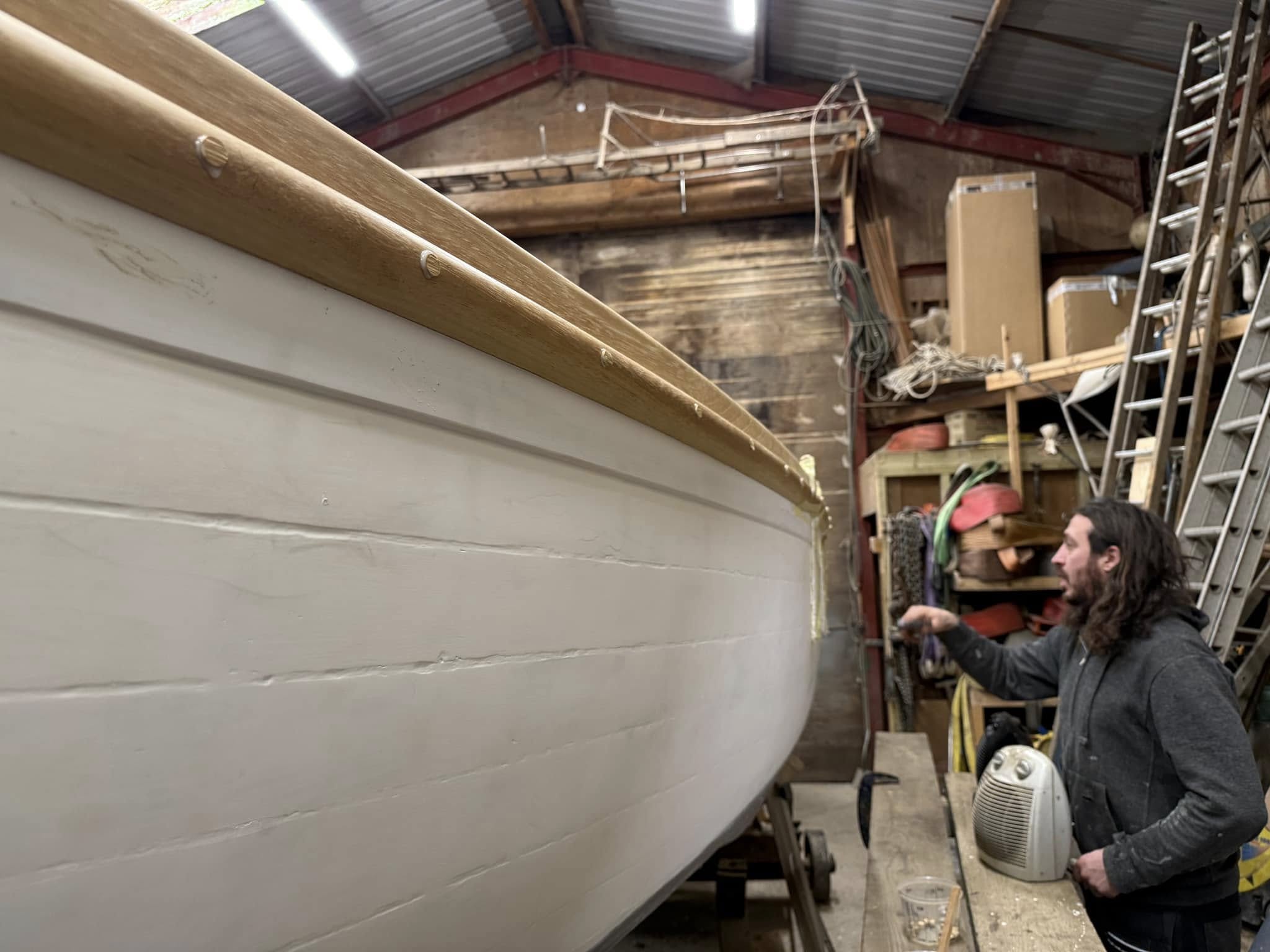
l) Lead ballast – As well as the iron keel weighing 1/2 ton, Severn carries 1/2 ton lead ballast. Scrap lead was acquired and shaped into lead ingots which were then used as ballast
m) Rigging – The boat needed to be rigged
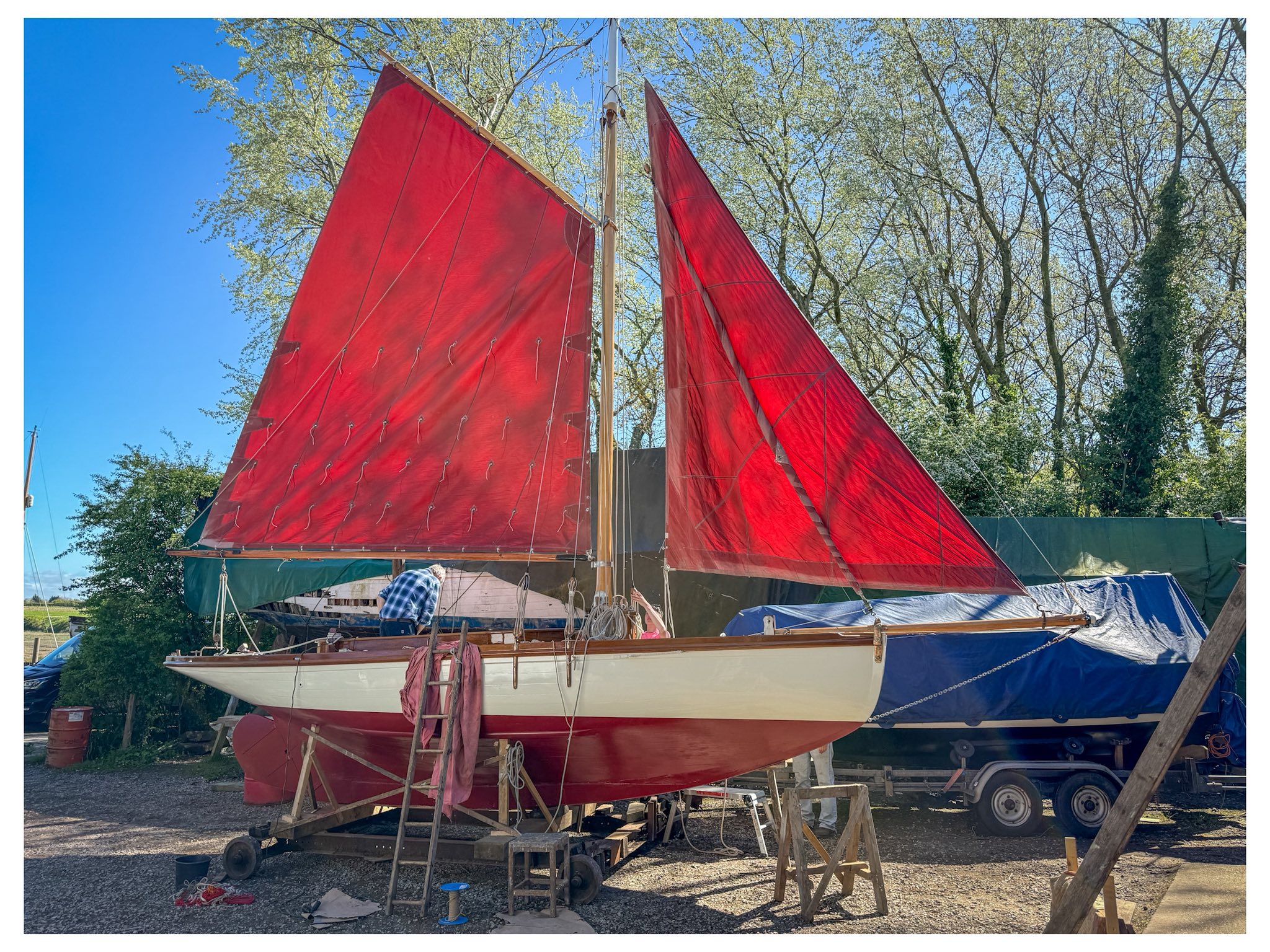
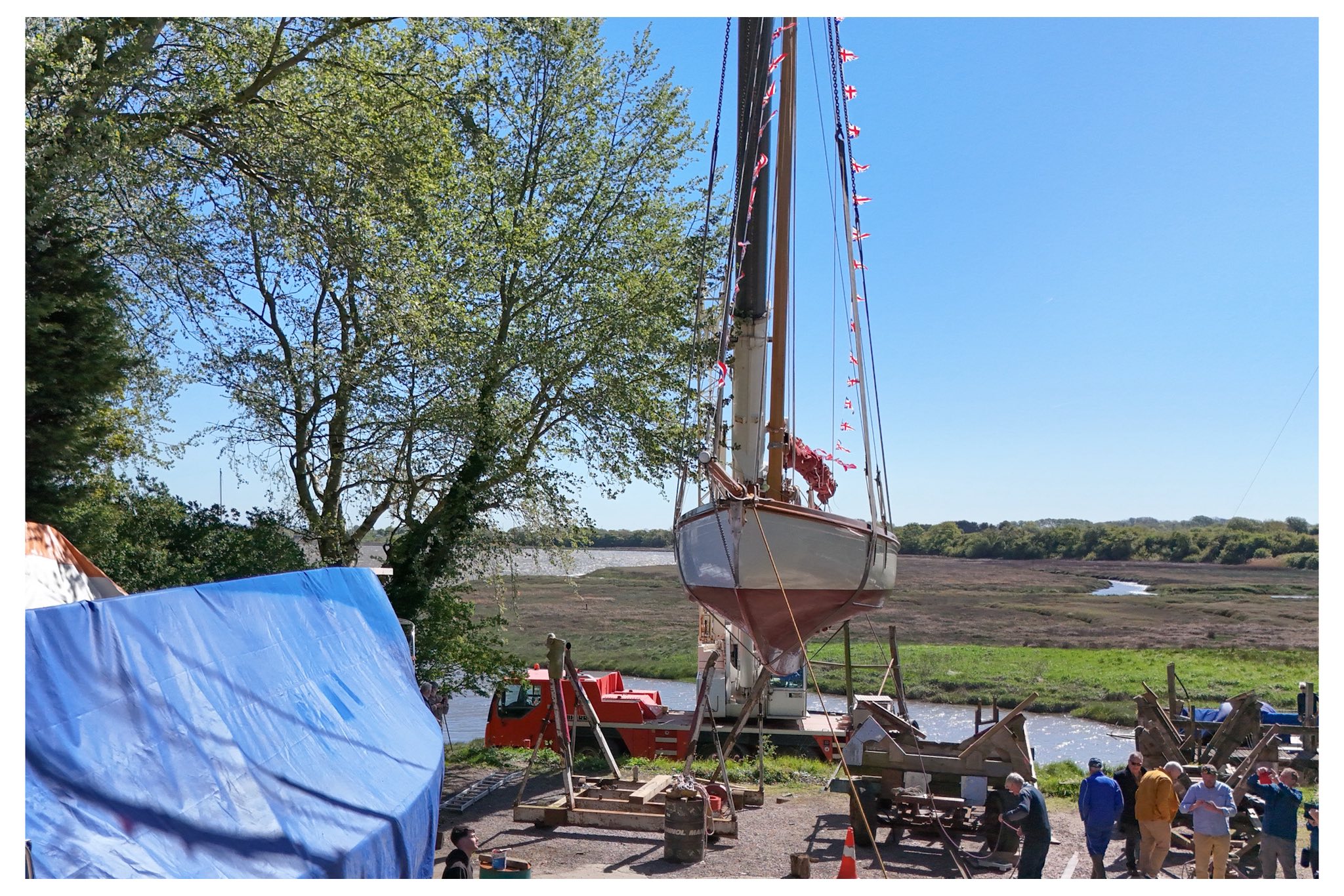
l) Launch – Finally after three and a half years work, Severn was craned into the water on Thursday 30th April 2026
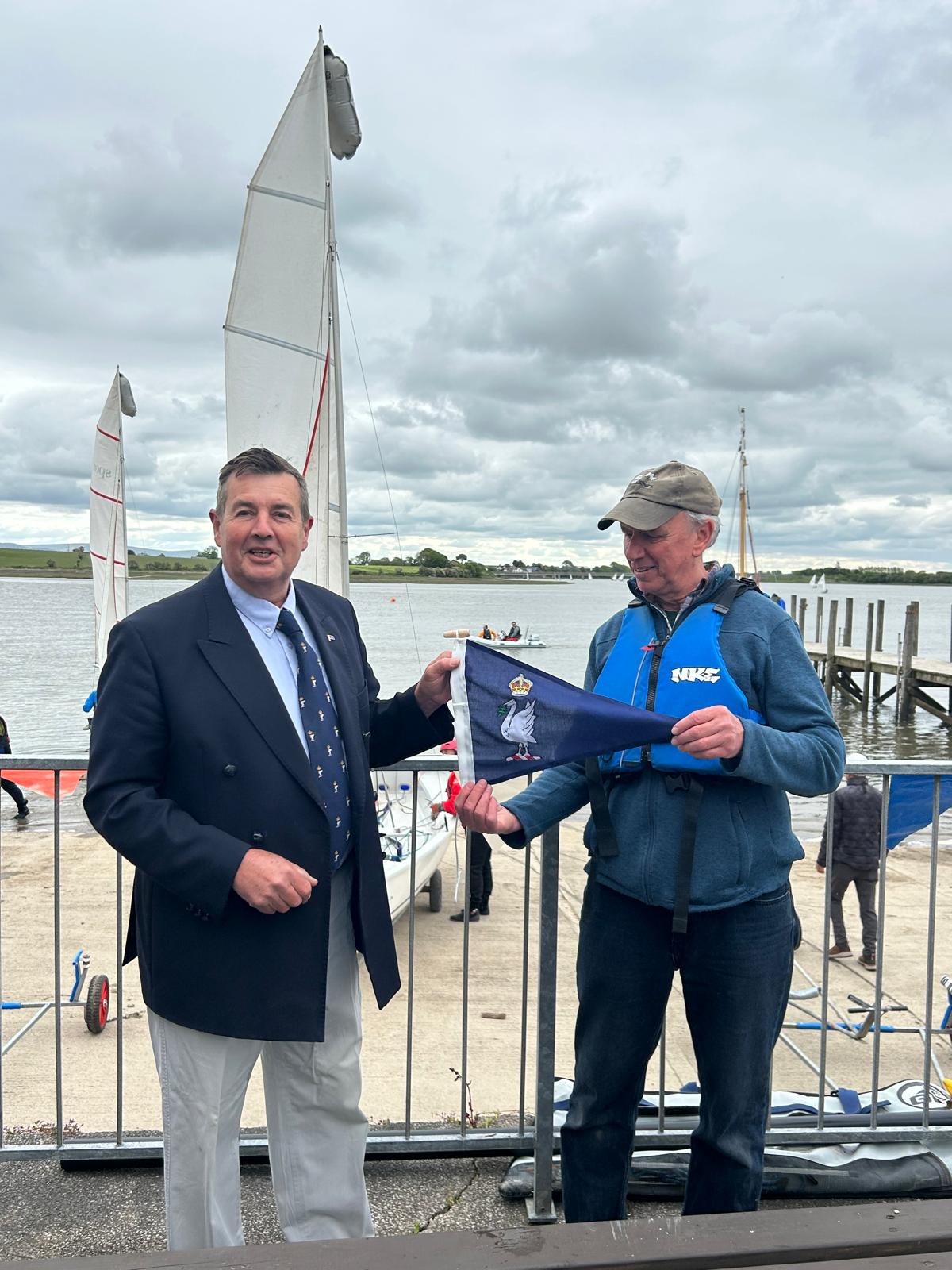
A launch event was held at Blackpool and Fleetwood Yacht Club on Saturday 16th May 2026. The design of Severn and the Rivers Class is based on the slightly earlier Blackpool and Fleetwood Jewel Class. Severn was presented with the Royal Mersey and Blackpool & Fleetwood burgees. Lunetide performed the Severn Song.
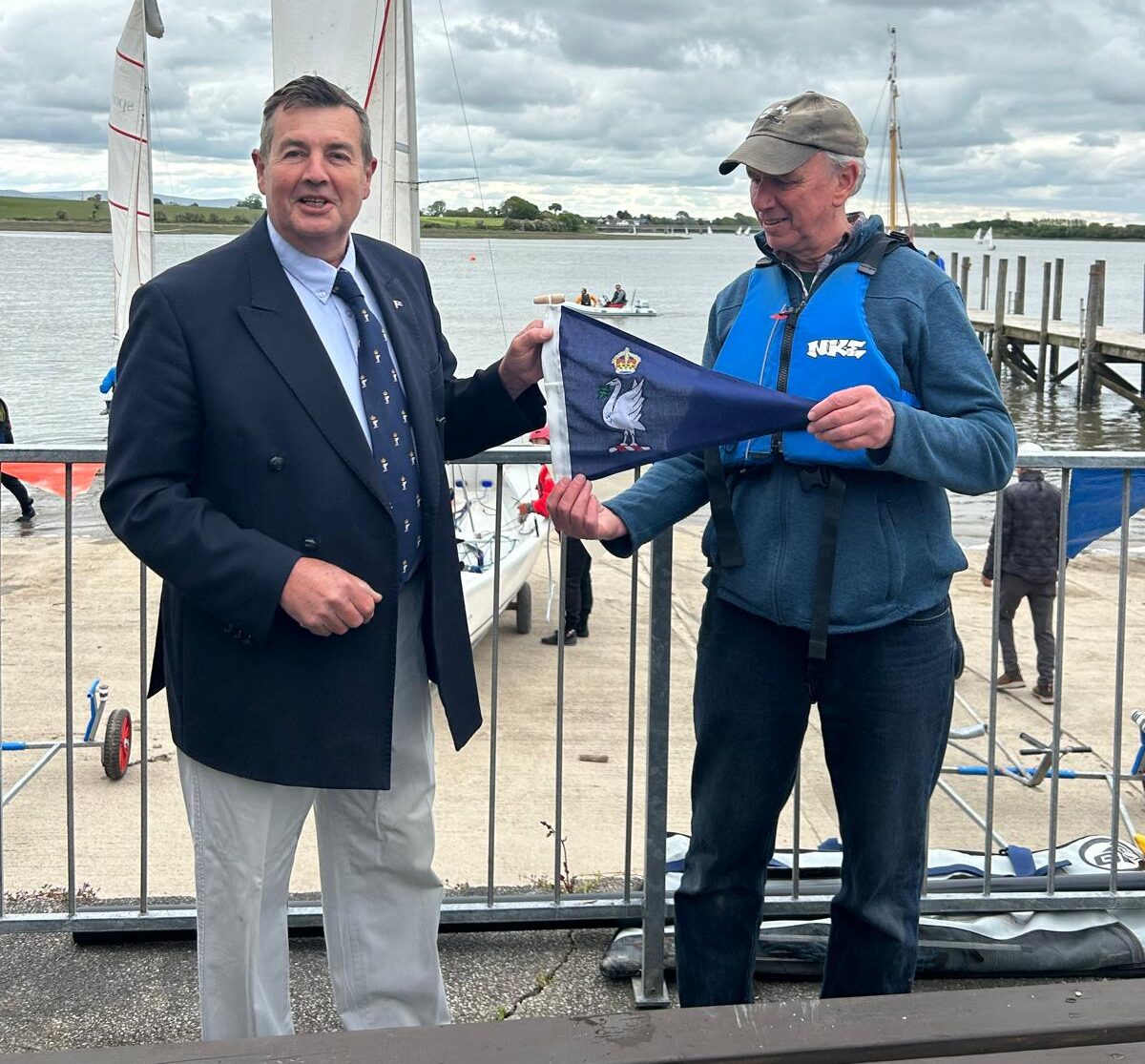
Ian Diamond RMYC presenting the Royal Mersey burgee
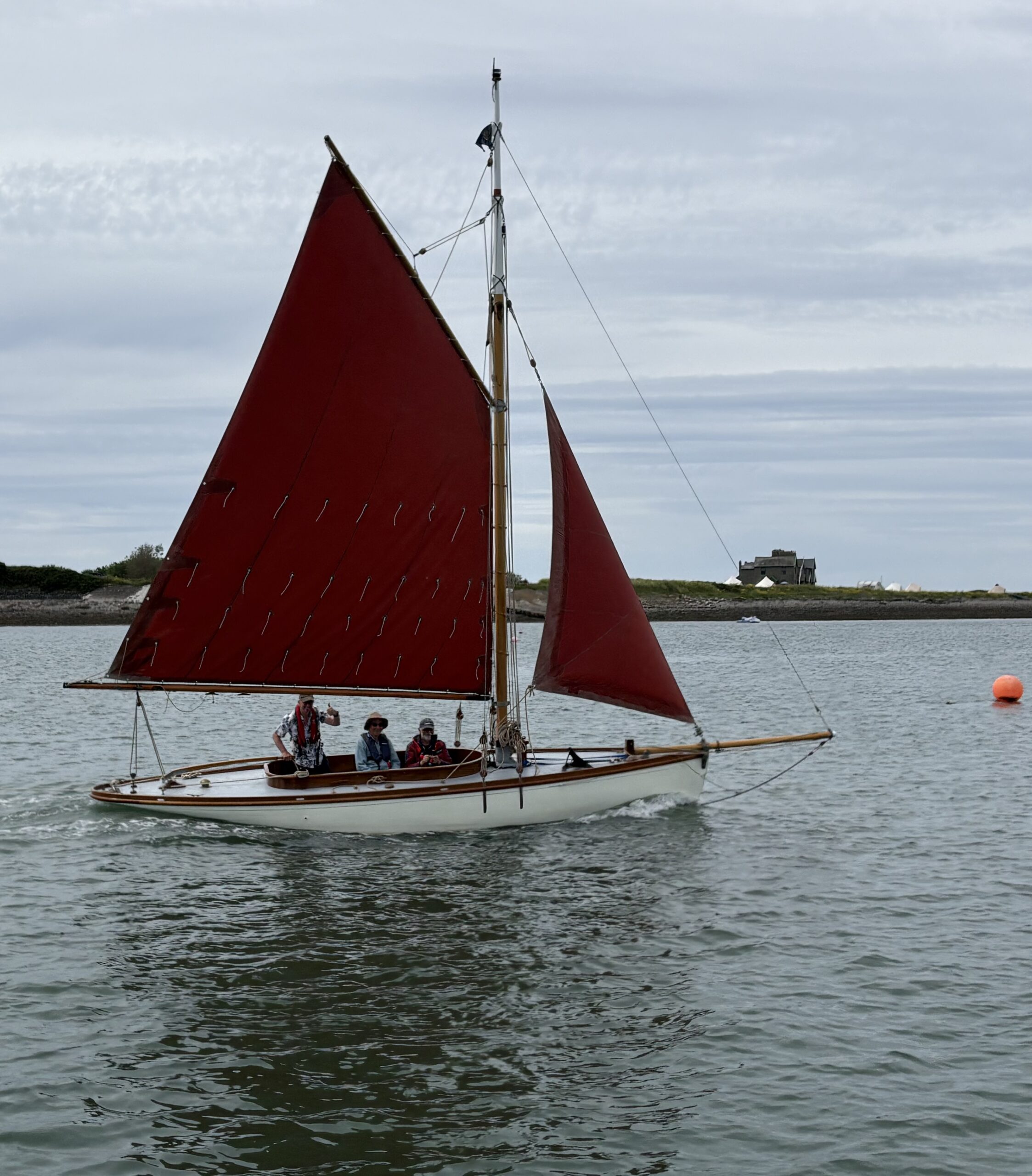
m) Sea Trials and Maiden Voyage – After four weeks commissioning work and sea trials, Severn left the Wyre Estuary sailing across Morecambe Bay to Roa Island, near Barrow on Saturday 30th May
Four videos were made of Severn’s restoration by Brad Cheek of Bradverts.
Episode 4 Launch April / May 2026
Episode 3 – Early 2026

Episode 2 – 2024

Episode 1: 2023

The restoration was funded by The National Lottery Heritage Fund, Garfield Weston Foundation, Headley Trust, Cumbria Community Foundation, Arnside Silverdale Grant Fund, Cumbria Community Foundation, Barnes Trust (Arnside), donations and fund raising events. A special thanks to Tattie Bogle Ceilidh Band who performed for free in yearly Burns Night events to raise money for Severn.






Photographs of Severn from Joe Wallace’s photograph showing pictures of Severn. At Whitsun 1928 and 1929 he sailed in Severn across the Dee Estuary to Rhyl and Mostyn with his friends.
Joe’s photo album was discovered in the attic of the West Cheshire Sailing Club in 2018.
Between 1972 and 1997 Severn was on the East Coast at various locations in Essex.
The first four photos show Severn when owned by Ken Tomlinson in 1980 on the Roach Estuary at Paglesham. The next four when owned by Lou Perrotta at Heybridge on the Blackwater Estuary in the mid 80s. The next an OGA race in 1988 and the last Severn in 1989.
Severn arrived in Arnside in 2018. The photos show her whilst she was in the water



Severn returns to the water from David Moss’ Boatyard at Skippool Creek – 30th April 2026


A launch event was held for Severn at Blackpool and Fleetwood Yacht Club on Sat 16th May celebrating the completion of her restoration. The design of the Royal Mersey Rivers Class was based on the design of the Blackpool and Fleetwood Jewel Class, Severn was presented with the burgees of the Royal Mersey and Blackpool & Fleetwood Yacht Club. Lunetide performed the Severn Song.
Two weeks later after sea trials Severn sailed across Morecambe Bay from Fleetwood to her new base at Roa Island.
The below photos include some taken by Tina Cordukes, a member of Lancaster Photographic Society.




Severn is based at Roa Island near Barrow-in-Furness


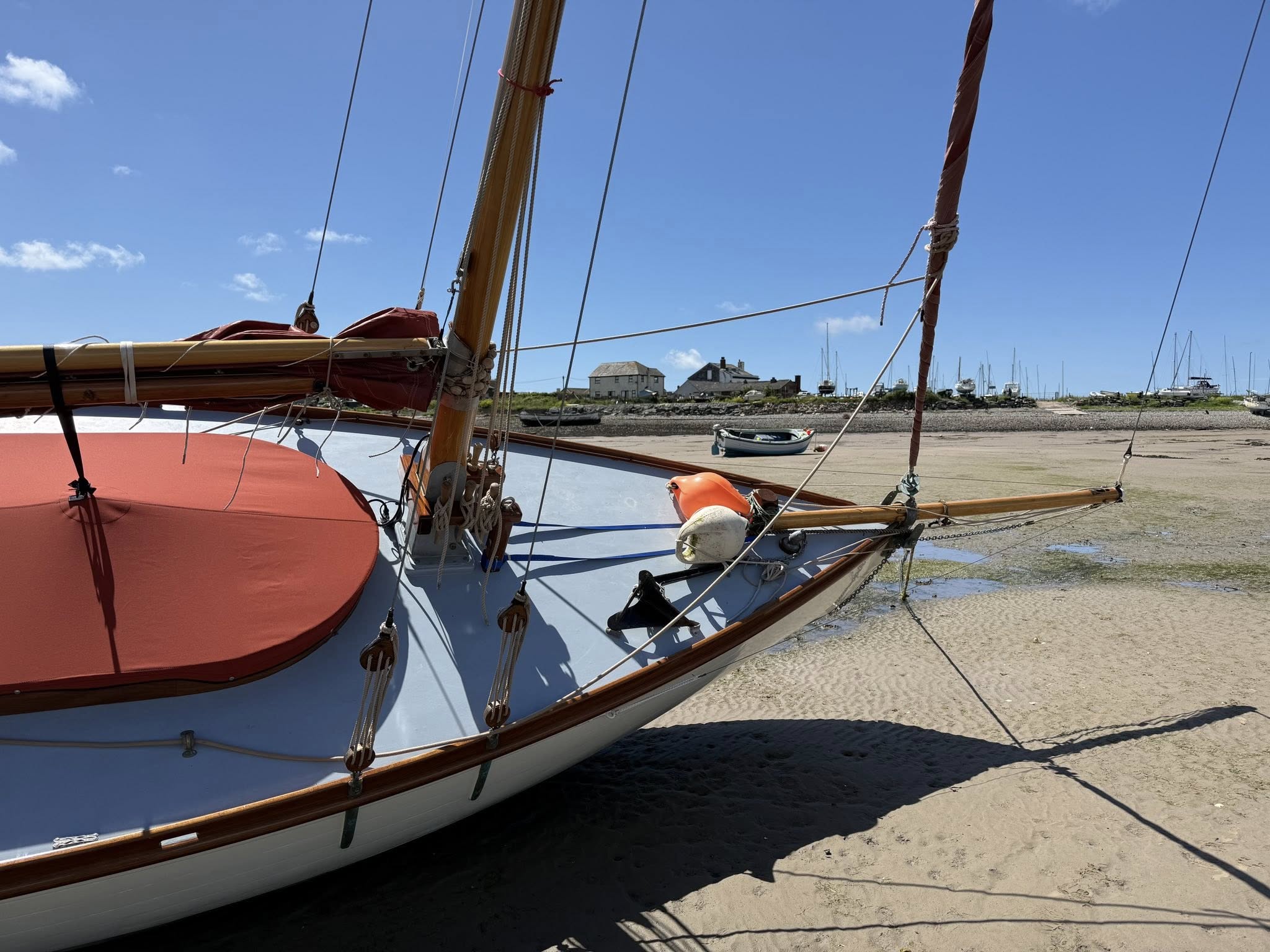

Severn took part in the Royal Barrow Festival of the Seas in August 2026 along with Hearts of Oak, a Morecambe Bay Prawner
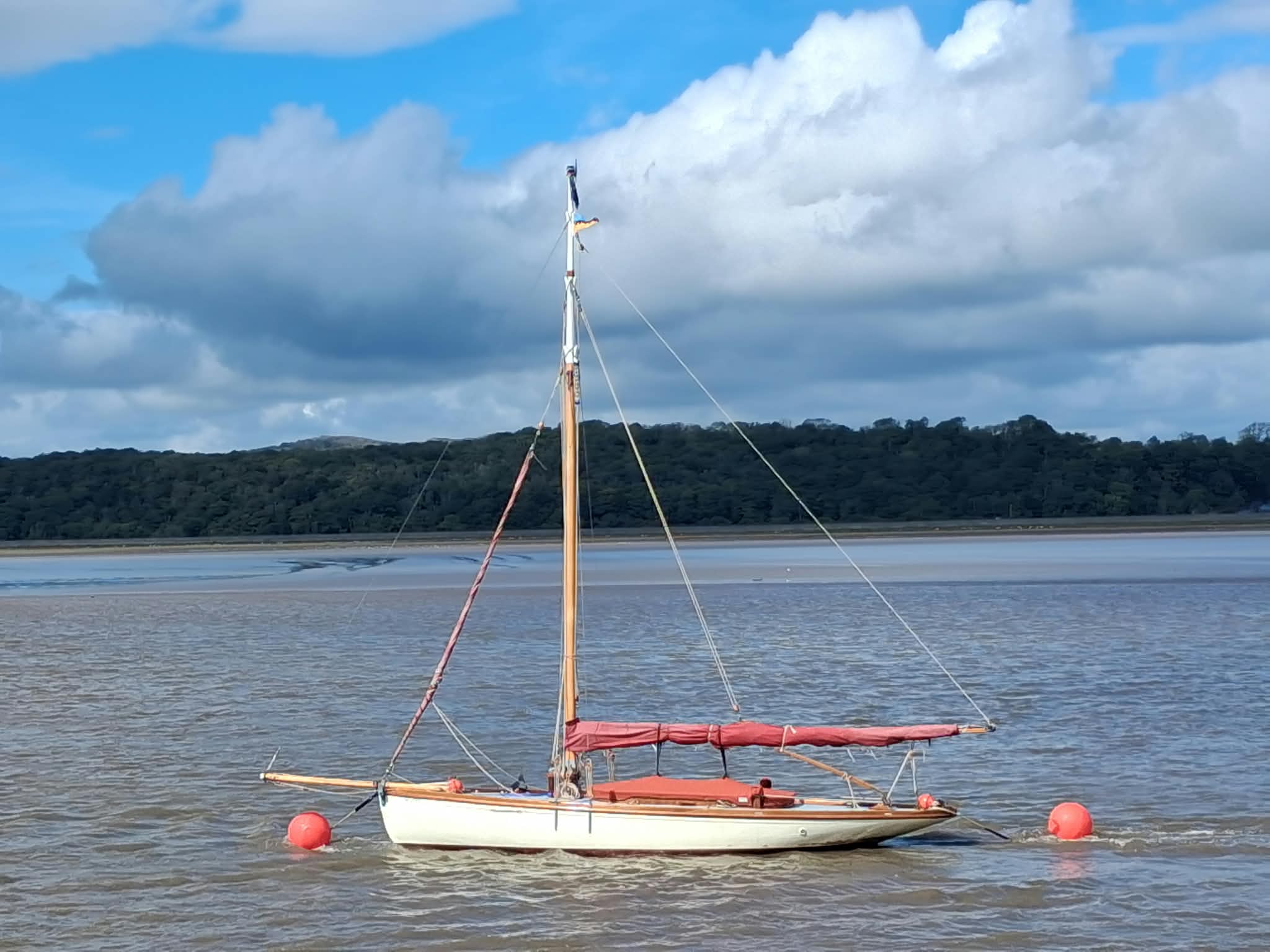
Severn arrived at Arnside for the first time after her restoration on Sat 29 August after sailing there from Roa Island


Contact Arnside Sailing Club
Email secretary@arnsidesailingclub.org.uk
Website arnsidesailingclub.co.uk
Browse the main boat classes and the individual Crossfields-built boats currently included in the archive.